Measuring Accessibility Progress — Metrics & KPIs Based on WCAG
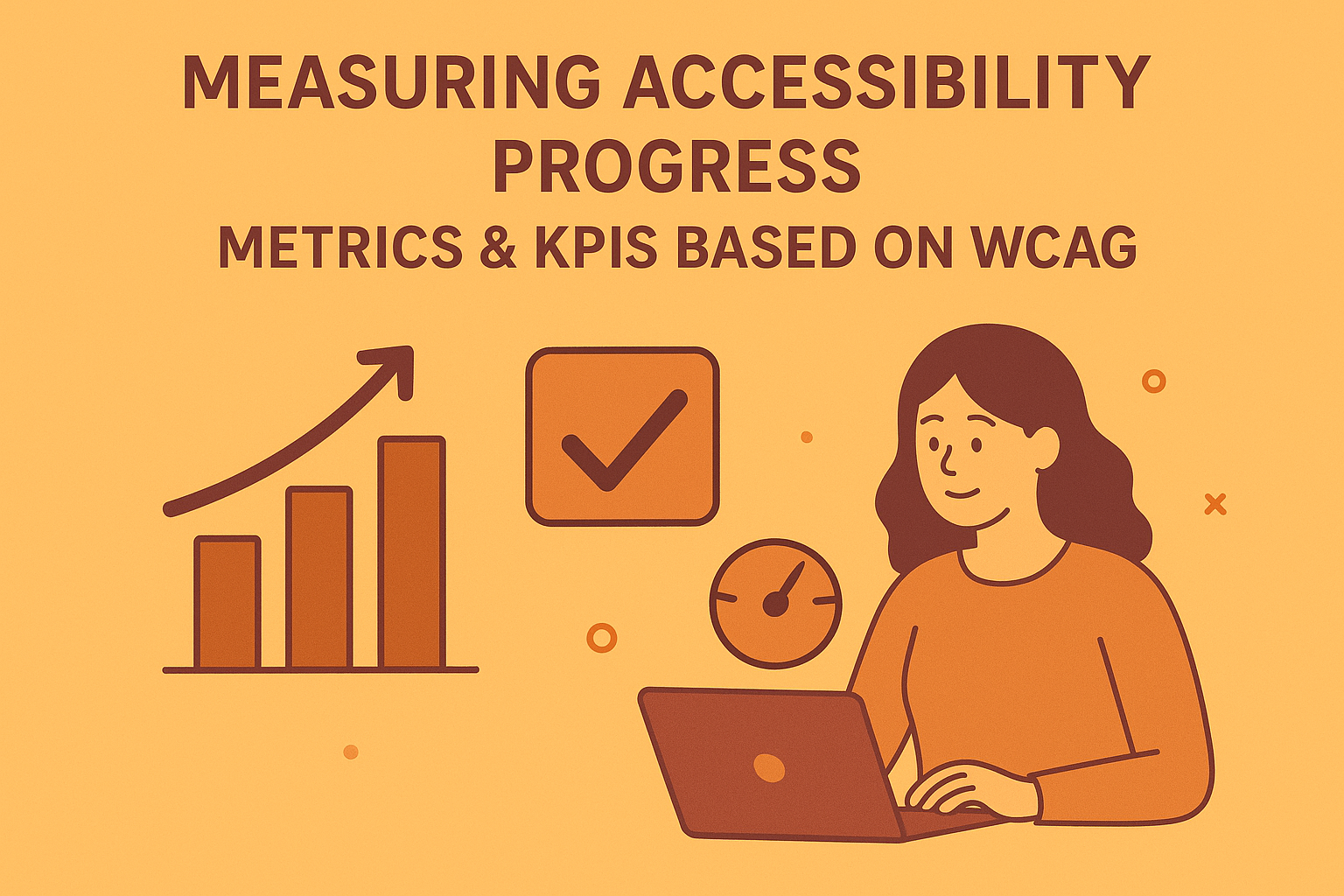
Measuring Accessibility Progress — Metrics & KPIs Based on WCAG
Introduction
Accessibility is not a one‑time compliance goal — it’s a continuous improvement process. To sustain progress, organizations need measurable indicators that track conformance with the Web Content Accessibility Guidelines (WCAG), monitor usability outcomes, and translate accessibility into tangible business value.
Measuring accessibility through standardized metrics ensures consistency, accountability, and visible results across teams. This guide outlines practical WCAG‑aligned metrics and key performance indicators (KPIs) for monitoring accessibility maturity from design to deployment.
Why Accessibility Metrics Matter
Measuring progress helps organizations understand where they stand and how their efforts translate into improvement. Accessibility metrics:
- Provide a benchmark for compliance with WCAG 2.2 criteria.
- Demonstrate accountability to stakeholders and regulators.
- Expose recurring issues early, reducing remediation cost and time.
- Connect inclusion initiatives to quantifiable user and business outcomes.
Tracking accessibility reveals trends and establishes a cycle of continuous learning — turning compliance into culture.
Mapping Metrics to WCAG
WCAG provides the framework for measurable evaluation through its success criteria and conformance levels — A, AA, and AAA. Each criterion can be mapped to metrics that assess both technical validation and user experience results.
- Conformance Coverage: Percentage of pages or components that meet WCAG 2.2 AA requirements.
- Severity Index: Weighted impact of unresolved accessibility issues classified by WCAG levels.
- Audit Recurrence: Frequency of accessibility reviews against WCAG updates and product releases.
Core WCAG‑Based Accessibility Metrics
1. Conformance Score
Measures overall compliance with WCAG criteria.
- Formula: (Total criteria passed / Total criteria tested) × 100.
- Set goals to achieve 90%+ for AA criteria to reach industry baseline compliance.
2. Violations per Page
Quantifies WCAG violations per page or template to track technical accessibility debt.
- KPI: Reduce average violations from 5 to 1 per page over two quarters.
- Combine automated scans (Lighthouse, axe) and manual testing for accuracy.
3. Issue Resolution Time
Tracks how long accessibility issues remain open between detection and remediation.
- Target: High‑severity WCAG violations fixed within 10 business days.
- Average closure time improvement demonstrates process efficiency and ownership.
4. Assistive Technology Compatibility Rate
Measures how often new or modified components perform correctly with assistive technologies.
- Goal: 100% of core templates validated for JAWS, NVDA, VoiceOver, and TalkBack.
- Include keyboard and screen reader testing benchmarks per release.
5. User Task Success Rate
Technical compliance alone cannot prove accessibility — measure whether users can complete critical tasks.
- Calculate the percentage of assistive tech users who successfully complete key flows (logins, forms, checkouts).
- Survey readability and ease‑of‑use post updates to correlate WCAG fixes to real user benefit.
6. Automation Coverage Rate
Accessibility automation integration in CI/CD pipelines ensures continuous validation.
- KPI: 90% of critical templates scanned automatically each build.
- Tracking: New issues per sprint and regression trend graphs for each WCAG criteria group.
Qualitative Measures of Accessibility Progress
Beyond numerical metrics, real accessibility progress shows up in user experience and inclusivity sentiment across stakeholders.
- User Feedback: Collect comments and support tickets related to accessibility barriers.
- Employee Training Rates: Percentage of developers and designers who complete accessibility training annually.
- Inclusive Design Integration: Monitor accessibility references in design reviews and UX audits.
- Language Readability Scores: Track average reading level and consistency with WCAG 3.1.5 (Reading Level).
Building an Accessibility Scorecard
An accessibility scorecard summarizes compliance and progress into visual indicators across criteria, stakeholders, and sprints.
- Compliance Score: Weighted overall percentage meeting WCAG AA criteria.
- Open Issue Count: Current total violations and pending fixes by category (e.g., color contrast, focus order).
- Remediation Trend: Graph showing issue reduction rate over time.
- Training Participation: Percentage of team trained this quarter.
- User Feedback Index: Rating from assistive technology test participants per release.
Scorecards make accessibility part of performance reviews and governance reporting without overwhelming teams with raw data.
Aligning Accessibility Metrics with Business Goals
Accessibility KPIs gain momentum when they feed into wider organizational objectives. WCAG metrics can speak the language of ROI and user retention.
- Legal Compliance: Reduction in non‑conformant items equals less regulatory risk.
- Conversion Rate Improvement: Accessible forms and buttons enhance customer completion rates.
- SEO Synergy: Semantic HTML improves search visibility and performance.
- User Retention: Inclusive experiences govern brand loyalty and return visitors.
Accessibility Reporting Frequency
Regular reporting ensures consistent progress tracking throughout the product lifecycle.
- Monthly: Automated tool reports on key templates and flows.
- Quarterly: Comprehensive manual audits and user testing summaries.
- Biannual: Accessibility scorecard presentation to stakeholders showing trend improvements and budget impact.
Common Pitfalls in Measuring Accessibility
- Overreliance on automation: Automated scores alone ignore usability and contextual accuracy.
- No baseline data: Measurements without initial benchmark misrepresent improvement.
- Ignoring qualitative insight: Numbers can’t replace real feedback from assistive technology users.
- Short‑term measurement: Accessibility progress is a long‑term effort requiring trend tracking over months or years.
Conclusion
Measuring accessibility through WCAG aligned metrics turns goals into trackable outcomes. Quantitative data builds accountability while qualitative feedback ensures true usability. By tracking compliance, training, and user impact, organizations can move beyond checking boxes — toward a culture of inclusive innovation.
Next steps: Create an accessibility dashboard or scorecard integrated into existing reporting systems. Review metrics quarterly and adjust targets as WCAG evolves to new versions or business expectations.