Keyboard Shortcuts & Accessibility Features for Power Users
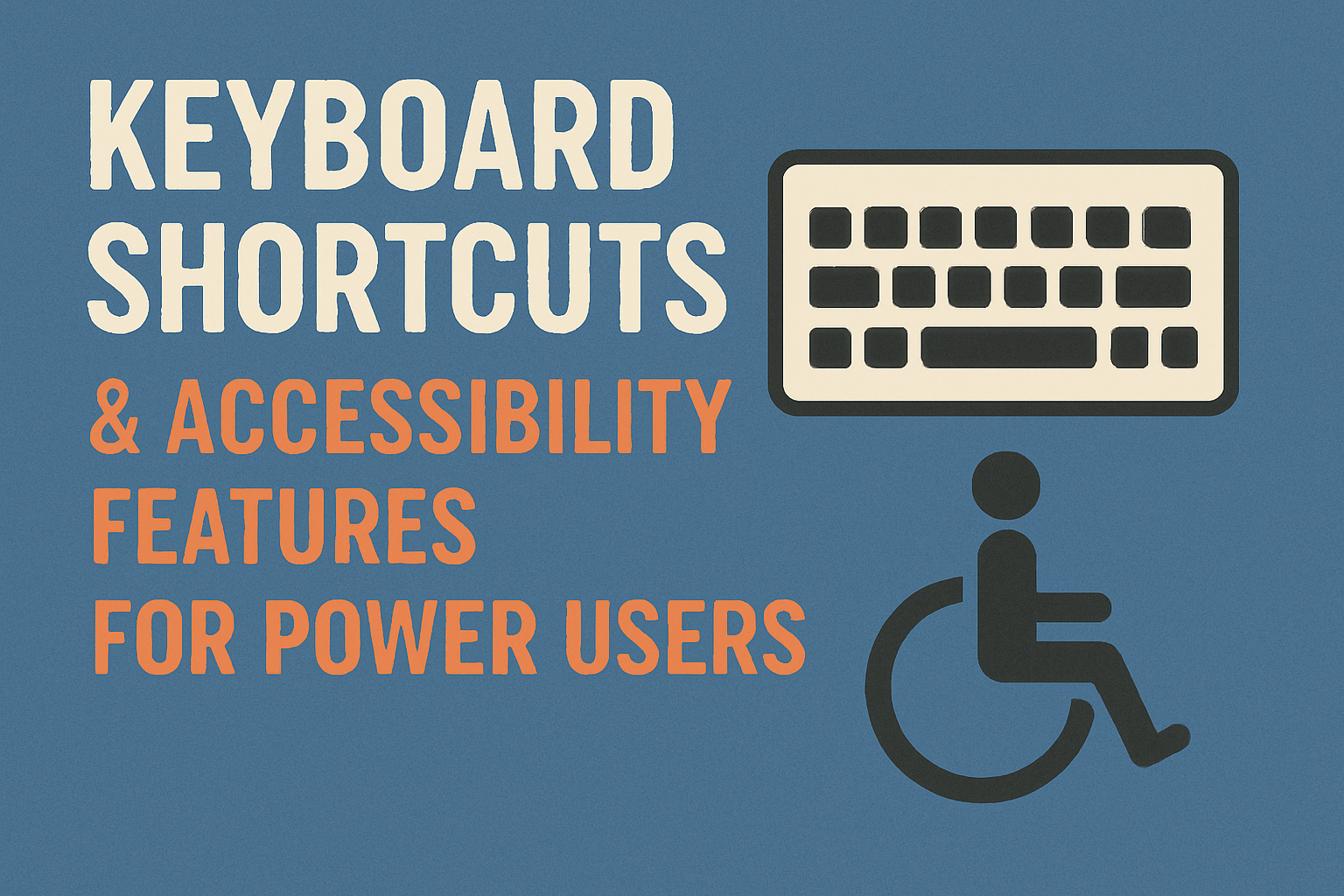
Keyboard Shortcuts & Accessibility Features for Power Users
Introduction
Keyboard accessibility benefits more than users with disabilities — it helps everyone work faster and more efficiently. Keyboard shortcuts and built‑in accessibility features empower users who rely on keyboards, screen readers, or adaptive input devices to navigate and interact seamlessly with software.
From productive power users to individuals with mobility or vision impairments, offering comprehensive, well‑documented keyboard interactions ensures an inclusive, flexible user experience that meets WCAG 2.2 operability standards.
Why Keyboard Shortcuts Enhance Accessibility
- Enable faster interaction for advanced users without mouse reliance.
- Assist users with limited mobility or those using switch devices or speech recognition.
- Provide alternate pathways for users navigating via screen readers or Braille displays.
- Create parity of experience across devices (desktop, laptop, touch interfaces).
Keyboard-first design reduces barriers and boosts productivity for everyone.
Designing Accessible Keyboard Shortcuts
1. Follow Platform Conventions
Use standard system or browser shortcuts to minimize confusion. Examples:
- Ctrl + S / Cmd + S — Save
- Ctrl + F — Find
- Alt + Shift + Arrow — Move items within lists
Avoid reinventing behaviors users already know from native environments.
2. Provide Flexible Customization
Allow users to personalize or disable shortcuts to prevent conflicts — particularly important for assistive technologies that reserve certain key combinations (e.g., screen readers like JAWS use
Insert + keys combinations). Offer accessible settings modals for remapping.
3. Ensure Discoverability
Expose shortcuts visually or contextually, such as using tooltips showing key combinations, an accessibility help dialog (? key), or a reference sheet in your product documentation.
4. Respect Browser & OS Keys
Avoid overriding default browser or operating system shortcuts (e.g., Ctrl + T, Alt + Tab). Stick to non‑conflicting, application‑specific combinations.
WCAG & ARIA Considerations
According to WCAG 2.1 Guideline 2.1 (Keyboard Accessible):
- All functionality must be operable via keyboard without requiring specific timing for keystrokes.
- Custom composite widgets (menus, sliders, modals) must provide full keyboard navigation and focus management.
Use ARIA attributes such as aria-keyshortcuts to expose available shortcuts to assistive technologies:
<button aria-keyshortcuts="Control+Shift+S">Save project</button>
This attribute helps screen readers announce relevant commands.
Keyboard Accessibility Patterns
1. Logical Focus Order
Ensure Tab moves between controls in visual order. Use tabindex="0" for natural inclusion and tabindex="-1" only for programmatic focus targets.
2. Visible Focus Indicators
Provide strong visual feedback when elements receive focus. WCAG 2.4.7 (Focus Visible) requires clear outlines or highlights.
3. Global Shortcut Manager
Use a central event handler to manage shortcuts consistently across your app:
document.addEventListener('keydown', (e) => {
  if (e.ctrlKey && e.key === 's') {
    e.preventDefault();
    saveDocument();
  }
});
Consider context (modals, forms) so shortcuts trigger only when relevant.
Accessibility Features to Support Keyboard Users
1. Skip Links
Add skip links to jump over repeated navigation or directly to main content:
<a href="#main" class="skip-link">Skip to main content</a>2. Landmarks & Headings
Use <main>, <nav>, <footer>, and ARIA roles for clear keyboard navigation landmarks.
3. Keyboard‑Accessible Modals
Trap focus within dialogs, restore it to triggering control upon close, and allow Esc to dismiss safely.
4. Tooltips & Popovers
Allow trigger via keyboard (Enter/Space) and close via Esc. Expose ARIA labels and descriptions for assistive tools.
Testing Keyboard Accessibility
- Unplug your mouse; ensure every task is possible using keyboard alone.
- Check focus movement order and verify Tab, Space, Enter, and arrow keys perform expected actions.
- Run automated tests (axe, Lighthouse) plus manual validation for complex interactions.
- Ensure
aria-keyshortcutsattributes announce correctly through screen readers.
Supporting Advanced Power Users
- Offer command palettes (like Ctrl + K) that can be navigated via keyboard and screen reader.
- Provide documentation in accessible HTML or Markdown with semantic tables for key references.
- Enable macros or scripting automation within safe accessibility boundaries.
Common Mistakes to Avoid
- Missing or invisible focus states on active elements.
- Overriding or stealing global browser shortcuts.
- Inconsistent behavior across app modules.
- Shortcuts requiring simultaneous mouse + keyboard input.
Benefits of Accessible Keyboard Features
- Greater efficiency for expert and novice users alike.
- Improved accessibility for individuals with limited motor control.
- Enhanced product usability and customer satisfaction.
- Better compliance with WCAG and platform guidelines.
Conclusion
Keyboard shortcuts and accessibility features empower users to interact efficiently and inclusively. Prioritizing full keyboard control—paired with visible focus and customizable shortcuts—creates faster, barrier‑free workflows for everyone, improving both productivity and compliance.
Next steps: Audit your application for comprehensive keyboard access. Add ARIA‑annotated shortcuts, clear focus indicators, and discoverable help documentation so users can take full control—effortlessly and inclusively.