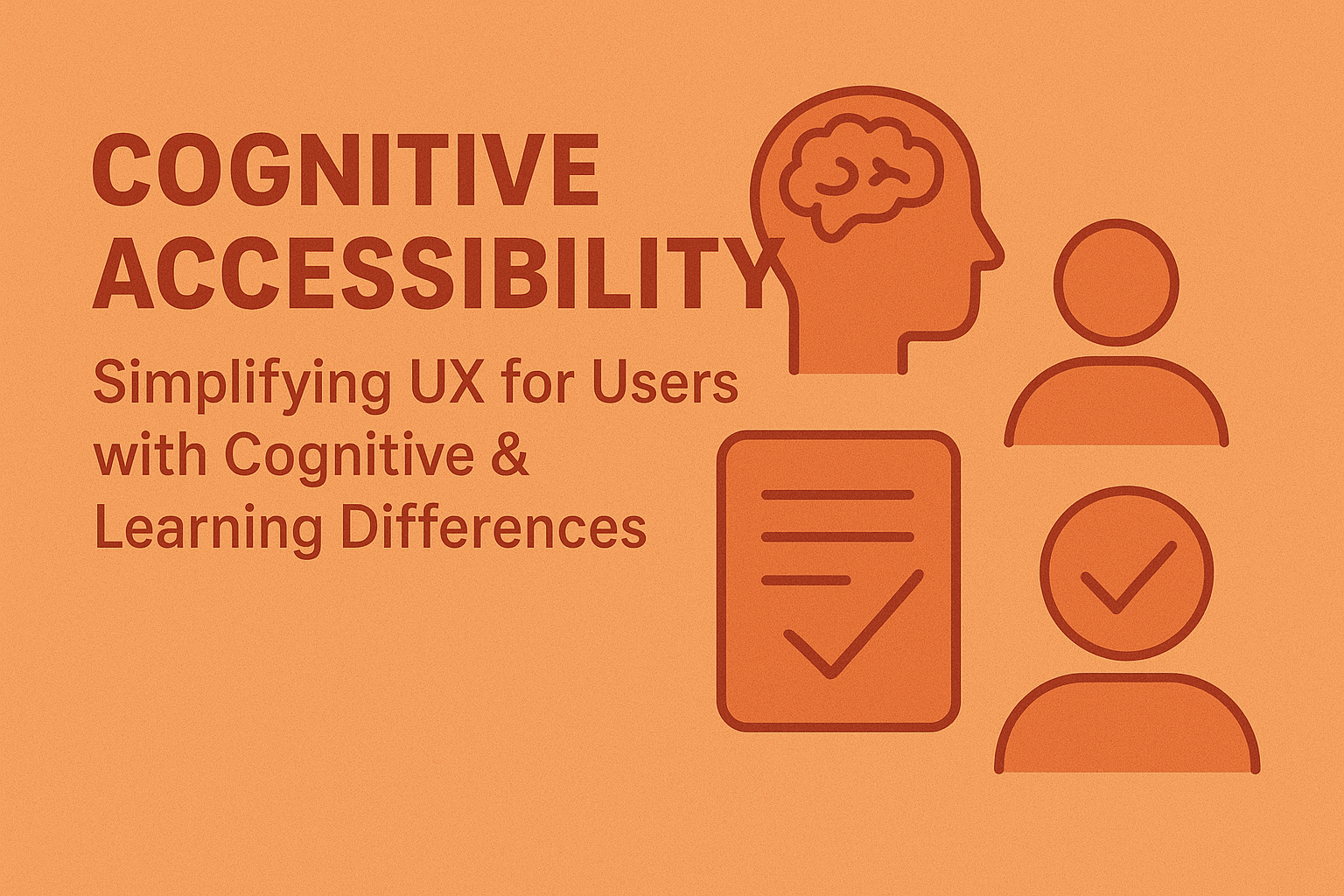
Cognitive Accessibility — Simplifying UX for Users with Cognitive & Learning Differences
Cognitive Accessibility — Simplifying UX for Users with Cognitive & Learning Differences
Introduction
Accessibility is often discussed in terms of visual, auditory, or motor impairments — but cognitive accessibility is just as vital. Users with dyslexia, ADHD, autism, memory limitations, or other cognitive and learning differences benefit from clear language, consistent layouts, and reduced complexity. Designing cognitively accessible experiences helps everyone: it simplifies content, strengthens understanding, and supports universal usability.
WCAG 2.2 and the ongoing WCAG 3 guidelines emphasize cognitive accessibility as a key dimension of inclusivity, urging teams to design with clarity, context, and focus in mind.
Why Cognitive Accessibility Matters
- Over 15% of the global population experiences learning or cognitive differences affecting memory, focus, or reading speed.
- Complex interfaces lead to user frustration and task failure even for experienced users.
- Plain language and structure benefit everyone — from screen reader users to multilingual audiences.
Good design for cognitive accessibility increases comprehension and reduces human error across all demographics.
WCAG Principles Related to Cognitive Accessibility
Cognitive accessibility touches multiple WCAG success criteria including:
- 3.1.5 – Reading Level: Use clear language and avoid unnecessary jargon.
- 3.2.3 – Consistent Navigation: Ensure element placement and order don’t change unexpectedly.
- 3.3.2 – Labels or Instructions: Provide clear guidance for all inputs and actions.
- 3.3.6 – Error Prevention: Allow review and correction before finalizing submissions.
Designing for Cognitive Accessibility
1. Use Plain, Familiar Language
Write content using short sentences and active voice. Avoid technical jargon or regional idioms. Explain acronyms the first time they appear.
Example: “Sign up for an account to get weekly updates,” instead of “Register to receive our periodic dispatches.”
2. Provide Clear Navigation & Structure
Use consistent placement for menus, buttons, and calls to action. Ensure the page’s hierarchy is predictable and logical.
- Group related content under clear headings.
- Use breadcrumb trails and progress indicators for multi‑step tasks.
- Maintain identical navigation patterns across pages.
3. Offer Assistance and Guidance
Provide users with cues and support to stay oriented:
- Offer inline hints, help buttons, or contextual tooltips.
- Include auto‑save or “resume later” options for long forms.
- Summarize key instructions before users begin complex processes.
4. Reduce Distractions
Excessive animation and clutter increase cognitive load. Present a clear visual path to completion.
- Use whitespace to separate content logically.
- Limit animation and provide pause/stop controls for movement.
- Avoid autoplay content or shifting layouts during interaction.
5. Support Memory and Focus
Assist users with limited short‑term memory or attention spans:
- Chunk long tasks into smaller steps.
- Offer visible labels for all icons and actions — never assume users remember meaning by shape or color alone.
- Provide a clear confirmation and undo option before committing irreversible actions.
6. Use Readable Typography & Layout
Typography affects comprehension and comfort for users with reading differences.
- Use sans‑serif fonts (e.g., Arial, Open Sans, Verdana) with ample line spacing (1.5× minimum).
- Avoid all caps text blocks, justified text, and small font sizes (<16 px).
- Maintain 4.5:1 contrast for body text and 3:1 for large text as per WCAG 1.4.3.
Enhancing Interactions
- Provide progressive disclosure — reveal information as needed rather than overwhelming users all at once.
- Use icons with text labels to reinforce meaning visually and linguistically.
- Ensure predictable feedback — clicking a button should always provide a noticeable visual or spoken response.
Testing for Cognitive Accessibility
Testing requires a combination of heuristic evaluation and real‑world user insight.
- Run a plain‑language readability test (aim for 6th–8th grade reading level).
- Conduct usability sessions with users who have cognitive or learning differences.
- Test navigation consistency with screen readers and voice input tools.
- Use WCAG quick reference guides for all relevant cognitive success criteria.
Common Accessibility Issues
- Overly complex instructions: Cognitive overload causes users to abandon tasks.
- Changing layouts: Moving navigation or controls between pages breaks orientation.
- Memory‑heavy tasks: Long forms without saved state or summaries create frustration.
- Visual clutter: Too many competing elements reduce focus and comprehension.
Best Practices for Inclusive Design
- Involve people with cognitive and learning differences during design research.
- Favor simplicity, repetition, and clear pathways over dense options.
- Create an environment of success: help users accomplish goals step by step.
- Document patterns and wording in your design system for consistency.
Conclusion
Cognitive accessibility bridges the gap between simplicity and effectiveness. By reducing cognitive load, offering assistance, and prioritizing clarity, you create user experiences that are flexible, comprehensible, and empowering. Accessibility for cognitive and learning differences doesn’t simplify the internet — it makes it smarter for everyone.
Next Steps: Audit your content and workflows for clarity and task completion rates. Apply plain‑language principles, consistent navigation, and structured guidance to ensure your product works for every cognitive profile.