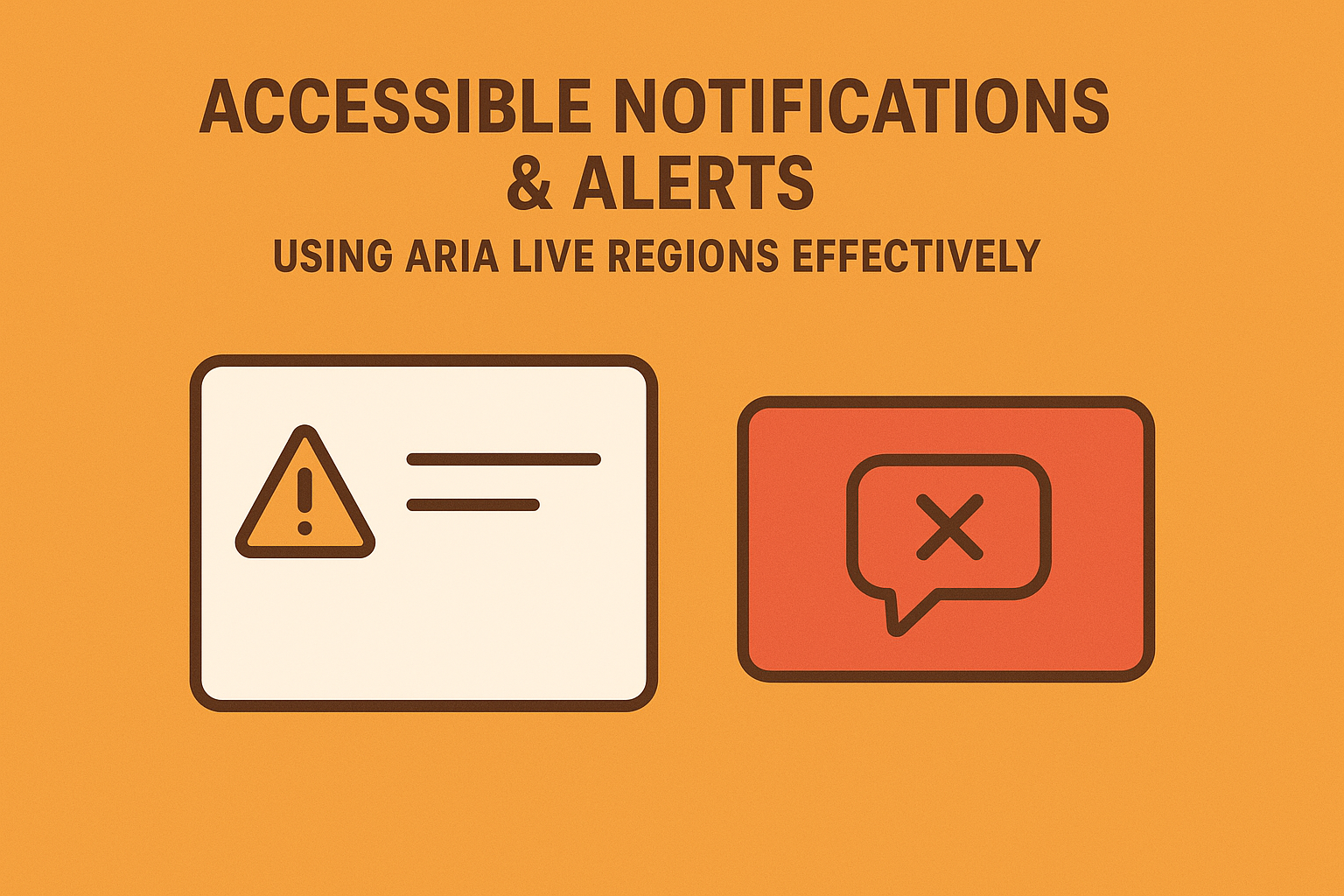
Accessible Notifications & Alerts — Using ARIA Live Regions Effectively
Accessible Notifications & Alerts — Using ARIA Live Regions Effectively
Introduction
Notifications and alerts provide essential feedback — from status updates to system warnings — but if they rely solely on visual cues, many users will miss them. Accessible notifications communicate changes and messages to assistive technologies automatically, without requiring users to refocus or navigate away from their current task.
By implementing ARIA live regions correctly, you can make sure real-time updates are announced to screen reader users as soon as they appear, meeting WCAG 2.2 Success Criterion 4.1.3 (Status Messages).
Why Accessible Notifications Matter
Users rely on notifications to confirm actions (“Profile saved”), identify errors, or get status updates. Without accessible announcement mechanisms, screen reader users may never know these updates occurred.
- Improves usability by keeping assistive technology users informed.
- Prevents confusion or duplicate actions caused by missed feedback.
- Maintains consistent multimodal communication — visual, audible, and programmatic.
What Are ARIA Live Regions?
ARIA live regions are HTML attributes that automatically announce content changes to users of screen readers. These attributes don’t require focus and work best for updating messages, progress indicators, or system responses.
aria-live— Defines the politeness level for announcements.aria-atomic— Determines if the entire region or only changed text is read.aria-relevant— Specifies which types of DOM changes trigger updates (e.g.,text,additions).
<div aria-live="polite">Profile updated successfully.</div>
Politeness Levels Explained
- aria-live="polite" — Announces messages when the user pauses interaction. Ideal for confirmation or informational messages.
- aria-live="assertive" — Announces messages immediately, interrupting the reader. Reserved for critical or urgent updates such as errors or warnings.
<div aria-live="assertive">Payment failed. Please try again.</div>
Types of Accessible Notifications
1. Status Updates
Provide positive confirmation after successful actions.
<div role="status" aria-live="polite">Your settings have been saved.</div>
2. Error or Warning Alerts
Critical feedback should be announced immediately.
<div role="alert" aria-live="assertive">Invalid email address entered.</div>
3. Progress Indicators
Inform users about ongoing operations.
<div role="status" aria-live="polite" id="upload-status">Uploading file: 50% complete.</div>
Best Practices for ARIA Notifications
- Place live regions outside of focusable elements to prevent reading conflicts.
- Avoid nesting multiple live regions; use one per update type.
- Keep messages brief and relevant — long announcements disrupt user flow.
- Ensure
aria-livetext is visible where possible so all users gain feedback. - Include both visual cue (color/icon) and textual description for universal perception.
Common Live Region Mistakes
- Empty containers: Messages added without initial DOM presence can fail to trigger announcements — always keep the live element rendered.
- Using assertive too often: Over-assertive messages interrupt screen readers unnecessarily.
- Not testing dynamically loaded content: Updates from AJAX or SPA frameworks often skip announcements if not properly tied to the DOM.
Integrating with Frameworks
Front-end frameworks (React, Vue, Angular, etc.) can interfere with ARIA updates due to virtual DOM rendering. Use techniques like refs or component lifecycle hooks to trigger updates correctly:
// React example
const [message, setMessage] = useState("");
useEffect(() => {
  setMessage("Your profile has been updated successfully.");
}, [saveAction]);

return <div aria-live="polite">{message}</div>;
// Vue example
<div aria-live="assertive">{{ errorMessage }}</div>
Testing Accessible Notifications
Confirm behavior manually and via assistive technology:
- Use NVDA or VoiceOver to see if updates are spoken automatically.
- Simulate both polite and assertive announcements to validate timing.
- Inspect
aria-livepresence and updates within browser Accessibility Tree tools.
Conclusion
Accessible notifications ensure all users receive timely and meaningful feedback, strengthening engagement and trust. Implement ARIA live regions thoughtfully — communicate important updates, avoid overload, and maintain user control. Accessibility is not just about compliance — it’s about clear, inclusive communication.
Next Steps: Audit your app for visual-only alerts, replace them with ARIA-backed notifications, and test across screen readers and frameworks to ensure real-time accessibility for everyone.