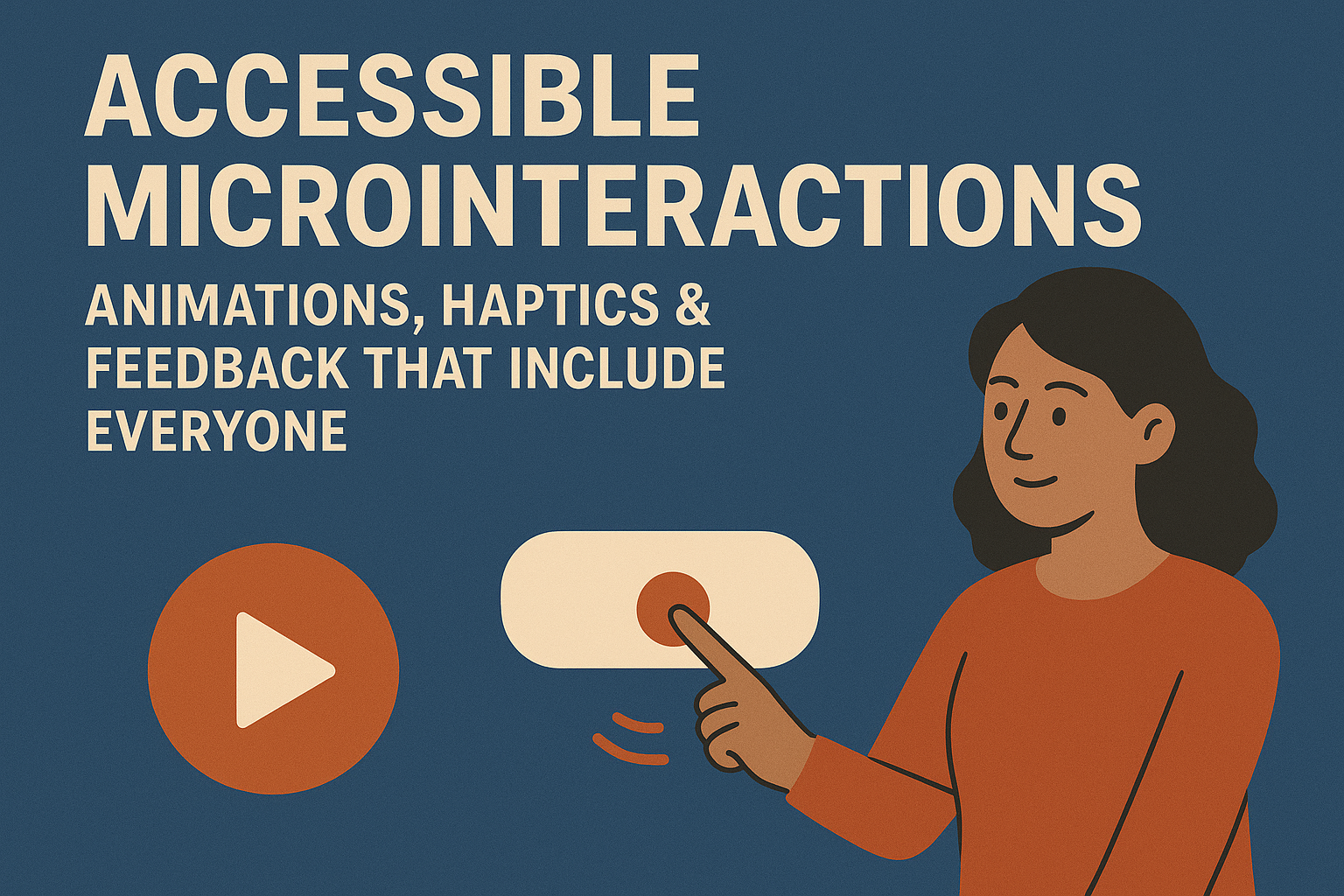
Accessible Microinteractions — Animations, Haptics & Feedback That Include Everyone
Accessible Microinteractions — Animations, Haptics & Feedback That Include Everyone
Introduction
Microinteractions — the subtle animations, vibrations, and sounds that respond to user input — shape how people perceive quality and engagement in digital products. Yet motion and sensory cues can pose accessibility challenges if not designed carefully. Overly flashy animations can trigger vestibular discomfort, while sound-only feedback may fail users with hearing loss. Truly inclusive microinteractions ensure that feedback remains meaningful for all users, regardless of sensory ability or preference.
This article explores how to design motion, animation, and tactile feedback systems that enhance usability and comply with accessibility standards such as WCAG 2.2 Success Criterion 2.3.3 (Animate Motion) and related guidelines.
Why Accessible Microinteractions Matter
- Deliver consistent, perceivable responses to every user action.
- Prevent vestibular discomfort caused by motion triggers like parallax or zooming.
- Provide multiple sensory feedback channels — visual, auditory, and tactile — for inclusive reinforcement.
- Create lightweight, non-intrusive motion systems that support usability, not distract from it.
Core Accessibility Considerations
1. Motion Sensitivity & User Preferences
- Respect the user’s system setting for “Reduce Motion” or “Prefers Reduced Motion.”
- Avoid large-scale visual motion like auto-scrolling backgrounds or zoom transitions.
- Offer equivalent feedback through static state changes when motion is disabled.
2. Auditory Feedback Accessibility
- Don’t rely solely on sound cues for confirmation or alerts — always pair them with visual or haptic indicators.
- Ensure sound notifications can be disabled, captioned, or replaced with vibration feedback.
- Comply with WCAG Success Criterion 1.4.2: Audio Control by offering user control over sound duration and volume.
3. Haptic Feedback Inclusion
- Use consistent vibration patterns for specific actions (e.g., error vs. success signals).
- Ensure haptic duration and intensity are adjustable or optional for comfort.
- Design haptic equivalents for sound or visual feedback to reach a wider user base.
Designing Inclusive Microinteractions
Step 1: Define Feedback Purpose
Start by identifying the purpose behind each microinteraction: Is it confirming an action, signaling an error, or indicating progress? Understanding intent ensures each feedback type is essential and meaningful.
Step 2: Design Motion Responsibly
- Use subtle transitions (opacity or scale ≤ 10%) instead of high-velocity animations.
- Choose easing curves that feel natural and gentle to reduce motion discomfort.
- Allow users to disable animations or replace them with instant state changes.
Step 3: Blend Feedback Channels
- Combine multiple modalities — e.g., a gentle haptic pulse + subtle color change = confirmation.
- Use the same signals consistently across your product for predictable user experience.
- Keep microinteractions brief and low‑impact to maintain performance and focus.
Step 4: Test Across Assistive Technologies
- Validate that screen readers announce state changes tied to microinteractions.
- Confirm keyboard and switch device users receive equivalent feedback cues.
- Simulate “Reduced Motion” mode to test graceful fallbacks in browsers and mobile OS settings.
Recommended Accessibility Metrics Framework
| Metric | Data Source | Frequency | Goal / Benchmark |
|---|---|---|---|
| Reduced Motion Preference Compliance | Automated Regression Tests | Per Release | 100% animations respond to prefers‑reduced‑motion |
| Feedback Channels Coverage | Design System Audit | Quarterly | ≥ 2 modalities available per interaction |
| User Comfort Score (Post‑test Survey) | Accessibility Testing Sessions | Quarterly | ≥ 4.5 / 5 average comfort rating |
| Vestibular Incident Reports | User Feedback Channels | Continuous | 0 reported motion discomfort issues |
Integrating Accessibility into Motion Systems
1. Design Systems & Tokens
Code motion and timing values into reusable design tokens — like duration, easing, or delay — that respect reduced‑motion preferences automatically.
2. Development Implementation
@media (prefers-reduced-motion: reduce) {
  * {
    animation-duration: 0s !important;
    transition-duration: 0s !important;
  }
}
This ensures animation‑dependent feedback gracefully degrades to instant visual updates for users sensitive to motion.
3. QA & Usability Validation
- QA verifies that “Reduce Motion” and “Mute Sound” settings are honored across devices.
- Accessibility testers confirm feedback is perceivable through assistive tech and alternative channels.
Common Pitfalls
- Ignoring user motion settings: Forces unintended motion that can cause discomfort.
- Over‑animated interfaces: Distract rather than clarify actions or states.
- Sound‑only signals: Fail to reach deaf or hard‑of‑hearing users.
- No feedback at all: Leaves users uncertain whether actions succeeded.
Best Practices for Sustainable Accessible Motion
- Provide accessible alternatives for all motion‑based interactions.
- Favor micro‑motion with clear purpose over decorative or looping animations.
- Document motion accessibility standards in your design system.
- Continuously collect user feedback to refine comfort and inclusivity.
Conclusion
Accessible microinteractions make digital experiences feel responsive, human, and inclusive. By designing motion, sound, and haptic feedback that adapts to user preferences, teams can create products that feel seamless and considerate to every kind of user. Accessibility in microinteractions isn’t just about compliance — it’s about expressing empathy through movement and feedback that connects rather than alienates.
Next Steps: Audit your product’s microinteractions for motion accessibility, add optional feedback channels, and document inclusive animation principles within your design system to ensure every touchpoint communicates clearly to everyone.