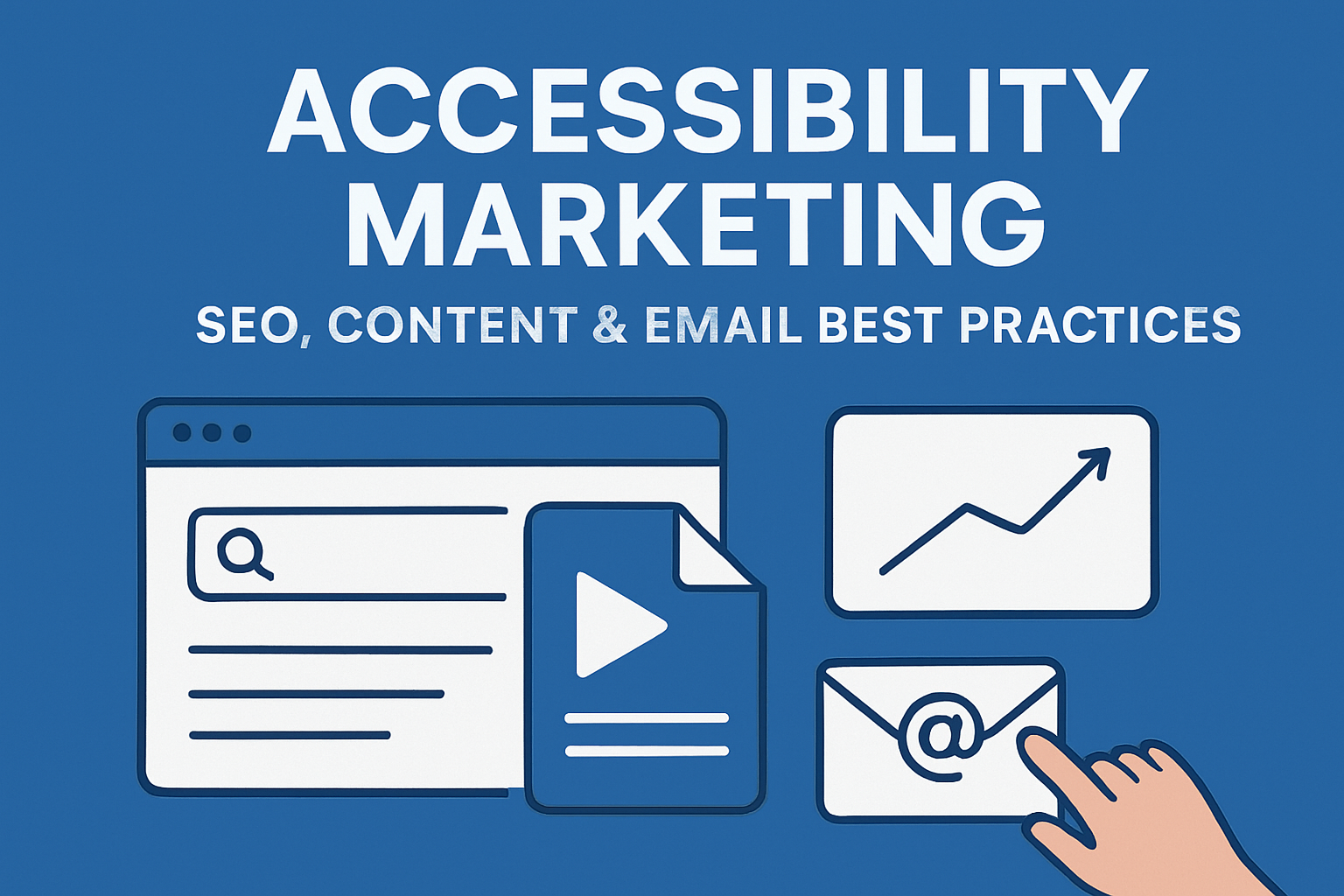
Accessible Marketing — SEO, Content & Email Best Practices
Accessibility and marketing share a common purpose—making content discoverable, understandable, and usable for everyone. Accessible marketing materials not only expand your audience but also enhance SEO, brand trust, and conversions. Whether creating web content, ad campaigns, or email newsletters, inclusive practices ensure your messaging reaches users with disabilities while improving the overall digital experience.
Optimizing marketing content for accessibility includes crafting semantic HTML, writing clear copy, and using correctly structured media so search engines and assistive technologies interpret it accurately.
Both accessibility and SEO rely on structured, meaningful content. Search engines and assistive technologies “read” pages similarly—parsing headings, semantic structure, and alternative text. Accessibility improvements often boost SEO performance by clarifying context and reducing technical barriers.
Headings (
Avoid “click here” or “read more.” Instead, use descriptive anchor text that explains destination or action, e.g., “Download our accessibility checklist.” This improves keyboard navigation and SEO keyword signals.
Images should include accurate alt text describing purpose or meaning.
Example good alt text: “Businesswoman using a tablet to review analytics dashboard.”
Decorative images should be marked with
Ensure that text and visual elements meet WCAG 2.2 contrast ratios (minimum 4.5:1 for normal text). This increases readability across devices and lighting conditions.
Add captions or transcripts for videos and podcasts posted within marketing content. This supports users who are deaf, hard of hearing, or non‑native speakers while improving SEO crawlability.
Email campaigns are often delivered across devices, screen sizes, and email clients. Making them accessible enhances engagement metrics such as open and conversion rates. Accessible emails consider structural markup, color contrast, and readability.
Use tables for layout responsibly (when needed), add proper heading tags, and ensure logical reading order. Keep body text as actual text, not embedded in images.
Always provide alt text for embedded images since many email clients block images by default. Avoid conveying critical information through images only.
Use accessible fonts like Arial or Helvetica with a minimum of 14 px for body text and sufficient line spacing. Maintain strong color contrast between text and background.
Ensure buttons have visible focus states and enough padding for touch accessibility. Actionable links should use descriptive text matching the email CTA (e.g., “Confirm my subscription”).
Test using screen readers like NVDA or VoiceOver, and check rendering in major clients (Gmail, Outlook, Apple Mail). Tools like Litmus and Email on Acid can simulate accessibility views.Accessible Marketing: SEO, Content & Emails
Introduction
The Link Between Accessibility & SEO
Accessible Web Content
1. Use Structured Headings
H1–H6) communicate hierarchy. Each page should have one <h1> that describes overall purpose, followed by nested sub‑headings. Clear hierarchy benefits users with screen readers and assists SEO algorithms in contextualizing content topics.2. Descriptive Links
3. Alternative Text for Images
alt="" or CSS background images.4. Color and Contrast
5. Video and Audio Descriptions
Accessible Email Marketing
1. Semantic Email Structure
2. Alt Text & Images
3. Font Choices & Sizing
4. Links & Buttons
5. Accessibility Testing for Emails
Inclusive Content Writing Principles
Testing Tools to Improve Marketing Accessibility
Accessible marketing aligns inclusivity with performance. By making content, ads, and emails perceivable and operable for every user, you not only meet accessibility standards but also gain measurable marketing advantages—better engagement, SEO rankings, and brand trust.
Next steps:
Audit your existing email templates, web content, and ad creatives for accessibility barriers. Implement structured headings, descriptive alt text, and inclusive language guidelines to future‑proof your marketing strategy.
Common Mistakes to Avoid
Conclusion