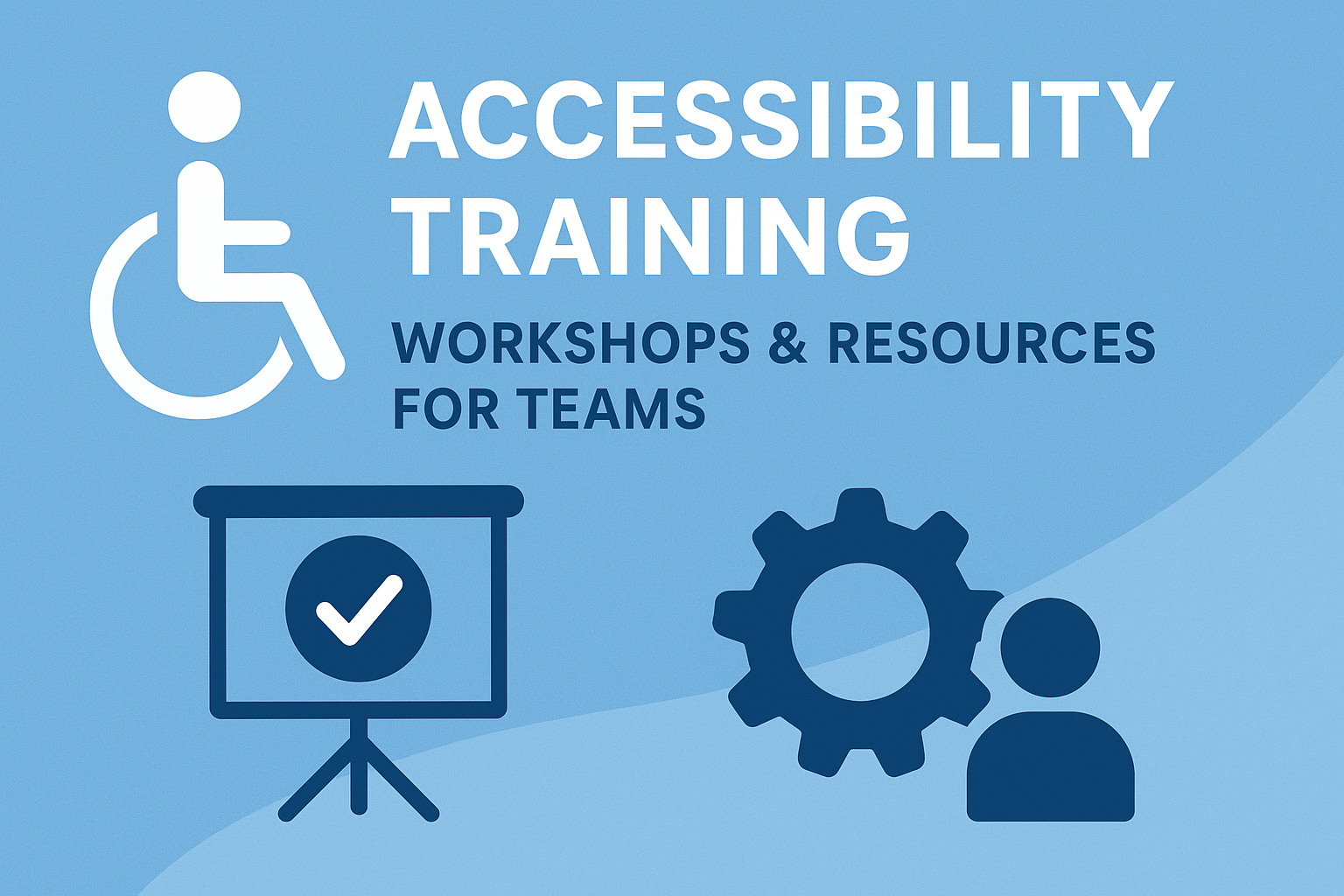
Accessibility Training — Workshops & Resources for Teams
Accessibility Training for Teams & Developers
Introduction
Accessibility is everyone’s responsibility—from designers and developers to writers, QA engineers, and product managers. Effective accessibility training empowers teams to identify issues, build inclusive solutions, and maintain long‑term compliance with standards such as WCAG 2.2, Section 508, and the European Accessibility Act (EAA). Building awareness through structured programs and workshops ensures accessibility becomes a cultural value, not just a box‑ticking exercise.
This section outlines how to develop successful accessibility training programs tailored to your organization’s teams, roles, and workflows.
Why Accessibility Training Matters
According to international accessibility studies, the leading cause of persistent accessibility issues is lack of knowledge among teams creating digital products. Without training, even well‑intentioned professionals can unintentionally exclude users.
- For Designers: Learn how colors, typography, and layout affect perception and usability.
- For Developers: Understand semantic markup, ARIA roles, and keyboard interaction patterns.
- For QA & Testers: Integrate accessibility testing into existing pipelines and automation frameworks.
- For Content Authors: Write inclusive copy, organize content hierarchically, and use alt text effectively.
Training creates advocates across disciplines who integrate accessibility expertise directly into daily tasks.
Key Components of an Accessibility Training Program
1. Foundational Awareness
Start with awareness sessions highlighting why accessibility is essential—ethical, legal, and business perspectives. Demonstrate real experiences from users with disabilities and assistive technologies such as screen readers, switch devices, or voice navigation.
2. Role‑Based Learning
Deliver targeted modules:
- Designers: Color contrast, readability, and cognitive accessibility principles.
- Developers: Semantic HTML, ARIA best practices, and focus management.
- QA Testers: Accessibility testing tools and bug triage workflows.
- Content Teams: Inclusive language, alt text, and heading structures.
3. Hands‑On Workshops
Practical workshops reinforce learning. Encourage participants to fix real accessibility bugs in their own projects. Demonstrate keyboard‑only navigation, color contrast testing, and screen reader validation live.
4. Certification & Continuous Learning
Accessibility knowledge evolves with new WCAG versions and technologies. Offer internal certification or partner with external programs such as IAAP Certified Professional in Accessibility Core Competencies (CPACC) to ensure ongoing professional development.
Training Delivery Methods
- Instructor‑Led Training (ILT): In‑person or virtual workshops combining lectures with demonstrations.
- eLearning & Self‑Paced Courses: Short video lessons, quizzes, and code labs integrated into LMS platforms like Coursera or Pluralsight.
- Blended Learning: Combines live sessions with follow‑up challenges, project reviews, and continuous mentoring.
- Accessibility Days or Hackathons: Team‑driven events to test real user feedback and fix issues collaboratively.
Essential Training Topics
- Overview of WCAG Principles (Perceivable, Operable, Understandable, Robust).
- Semantic HTML and ARIA usage guidelines.
- Keyboard navigation and focus order testing.
- Color contrast and responsive typography standards.
- Testing with screen readers (NVDA, VoiceOver, JAWS).
- Mobile and PWA accessibility practices.
- PDF, form, and multimedia accessibility fundamentals.
Tools to Support Learning
- WAVE Evaluation Tool — quick online accessibility testing.
- axe DevTools — browser extension for automated testing.
- Lighthouse Accessibility Audit — integrated into Chrome DevTools.
- Color Contrast Analyzer — verification during design and code.
- WebAIM Contrast Checker — for quick visual validation.
Integrating Accessibility Training into Workflow
For maximum effect, embed accessibility training into regular development and design processes rather than making it a one‑time task.
- Add accessibility learning as part of new‑hire onboarding.
- Integrate refresher courses every 6–12 months with WCAG updates.
- Include accessibility checkpoints in design reviews and pull request templates.
- Reward accessibility champions and contributions to inclusive projects.
Measuring Training Impact
To evaluate success, track outcomes such as:
- Increase in accessibility issue detection and resolution rates.
- Reduction in accessibility regressions post‑release.
- Employee accessibility skill certification attainment.
- Positive user feedback from users with disabilities.
Link training results to tangible benefits—fewer audits, improved compliance, and better user satisfaction.
Common Challenges
- Lack of leadership buy‑in—solved through proving ROI and compliance risk reduction.
- Too generic content—customize programs per role and product type.
- Limited hands‑on practice—ensure experiential workshops accompany theory.
- Training fatigue—sustain engagement using gamification and recognition incentives.
Best Practices
- Make training multidisciplinary—include design, content, and development roles.
- Keep all materials accessible: transcripts, captions, and keyboard operability.
- Encourage peer reviews of deliverables for accessibility standards.
- Document lessons learned in internal wikis or design system guidelines.
- Reassess training programs as accessibility standards evolve.
Conclusion
Accessibility training transforms compliance into a shared organizational mindset. When teams across roles understand accessible design principles, they create digital products that serve everyone better while reducing risk and improving performance. Training is not just instruction—it’s empowerment.
Next steps: Develop or refresh your team’s accessibility curriculum. Schedule workshops, assign accessibility champions, and measure progress through audit improvement and employee proficiency.