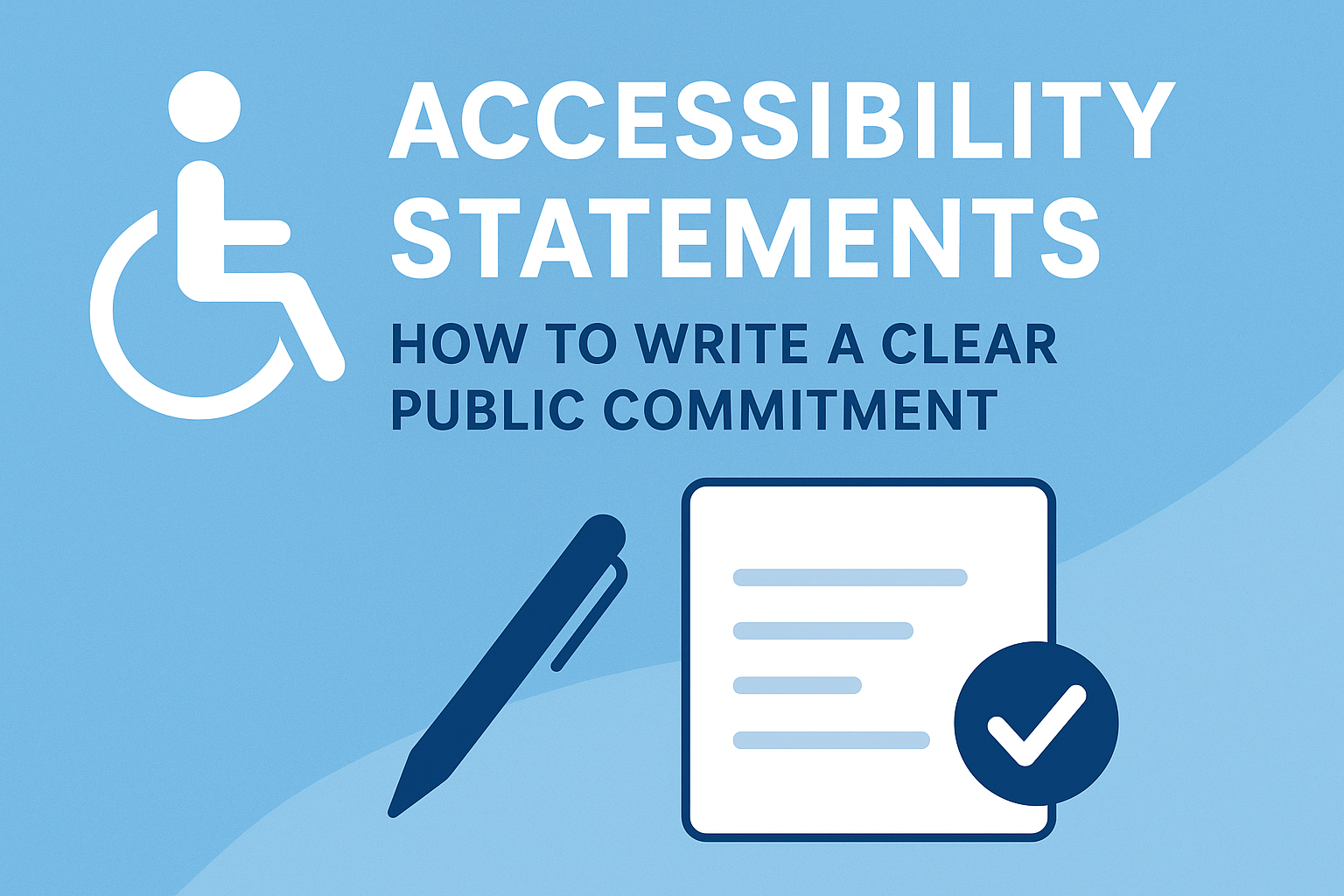
Accessibility Statements — How to Write a Clear Public Commitment
Accessibility Statements & Public Commitments
Introduction
An accessibility statement serves as a public declaration of your organization’s commitment to accessible digital experiences. It communicates transparency, accountability, and ongoing improvement by explaining your current accessibility status, known limitations, and how users can request assistance or report issues.
Publishing a meaningful accessibility statement is one of the most effective ways to demonstrate conformance with laws such as the ADA, Section 508, and the European Accessibility Act (EAA). Beyond compliance, it tells users that accessibility is a valued and continuous part of your product lifecycle.
Why Accessibility Statements Matter
An accessibility statement builds trust and transparency by:
- Clearly informing users about your accessibility approach and standards.
- Helping people understand how to get help if they encounter barriers.
- Demonstrating compliance to regulators, partners, and procurement officers.
- Encouraging internal accountability and continuous improvement.
A well‑written statement is not simply a legal safeguard—it is a communication tool that expresses empathy, openness, and inclusion.
Core Elements of an Accessibility Statement
1. Commitment Statement
Start with a concise commitment such as: “We are committed to ensuring digital accessibility for people with disabilities. We continually improve the user experience for everyone and apply relevant accessibility standards.” This sets the tone of your organization’s values.
2. Applicable Standards
Identify which guidelines your digital content aims to meet, typically WCAG 2.1 AA or WCAG 2.2 AA. If other laws or regional standards apply—such as Section 508 (U.S.), EN 301 549 (EU), or
AODA (Canada)—mention them explicitly.
3. Assessment Methods
Explain how accessibility is evaluated, for example: - Internal manual audits by accessibility specialists. - Automated testing using tools like axe Core, WAVE, or Lighthouse. - External third‑party evaluations or certifications.
4. Known Issues & Limitations
Listing current barriers shows honesty and active improvement. Example: “Some older PDFs and archived content may not be fully tagged; we plan to update them by Q4 2024.” Provide clear timelines for remediation and transparency about progress.
5. Feedback Process
Include an accessible channel for users to contact you (email, form, phone, or chat). Ensure the contact form itself is accessible. Specify expected response time for accessibility feedback or
support.
6. Date & Review Cycle
Show when the statement was last updated and how often it will be reviewed. Accessibility is ongoing; updating your statement reinforces credibility and accountability.
Example Structure
Below is an example framework you can adapt:
Accessibility Statement for [Organization Name]

Commitment:
We strive to make our website accessible and usable by everyone, regardless of technology or ability.

Standards:
Our aim is to comply with WCAG 2.2 Level AA.

Testing & Monitoring:
We combine manual testing, automated scans, and user feedback to identify and fix accessibility issues.

Known Challenges:
Some downloadable documents are not fully accessible. We are updating them throughout 2024.

Feedback:
If you experience any accessibility barriers, please contact us:
Email: accessibility@[organization].com
Phone: +1-555-123-4567

Statement updated: January 2024
Review frequency: every 6 months
This structure communicates maturity and responsibility while remaining concise.
Best Practices for Writing Accessibility Statements
- Be honest—acknowledge known issues rather than claiming full compliance.
- Use plain, non‑technical language understandable to general audiences.
- Ensure the accessibility statement page itself is fully accessible.
- Link the statement from every page footer and within help/support sections.
- Update regularly—both after audits and major product updates.
- Include a link to your product accessibility roadmap if available.
Accessibility Statement Placement
Place the statement where users expect to find support and policy information—commonly in website footers, navigation, or help menus. For apps, link it within settings, About, or Legal sections.
This ensures discoverability for screen reader users and demonstrates organizational transparency.
Legal and Ethical Considerations
Accessibility statements can serve as evidence of intent and proactive compliance in legal or procurement contexts. However, they do not guarantee liability protection—statements should accurately reflect the actual commitment and actions taken. Exaggerated claims can damage credibility if audit results contradict them.
Common Mistakes to Avoid
- Copying generic statements without tailoring to real processes.
- Omitting contact information or feedback mechanisms.
- Using overly complex or legalistic language that itself becomes inaccessible.
- Failing to update after major accessibility improvements or policy changes.
Benefits of a Public Accessibility Commitment
- Demonstrates transparency and inclusion as part of brand values.
- Reassures customers, partners, and regulators of ongoing compliance.
- Encourages employee participation by defining accessibility as a shared goal.
- Reduces reputational risk by showing consistent engagement with accessibility standards.
Conclusion
An accessibility statement is more than a compliance checkbox—it is a reflection of your organization’s dedication to inclusive design and continuous improvement. When written honestly and reviewed regularly, it strengthens user trust and positions accessibility as a core part of organizational culture.
Next steps: Draft or update your organization’s accessibility statement, include clear contact options, publish it prominently on your site, and commit to periodic reviews aligned with product updates and WCAG revisions.