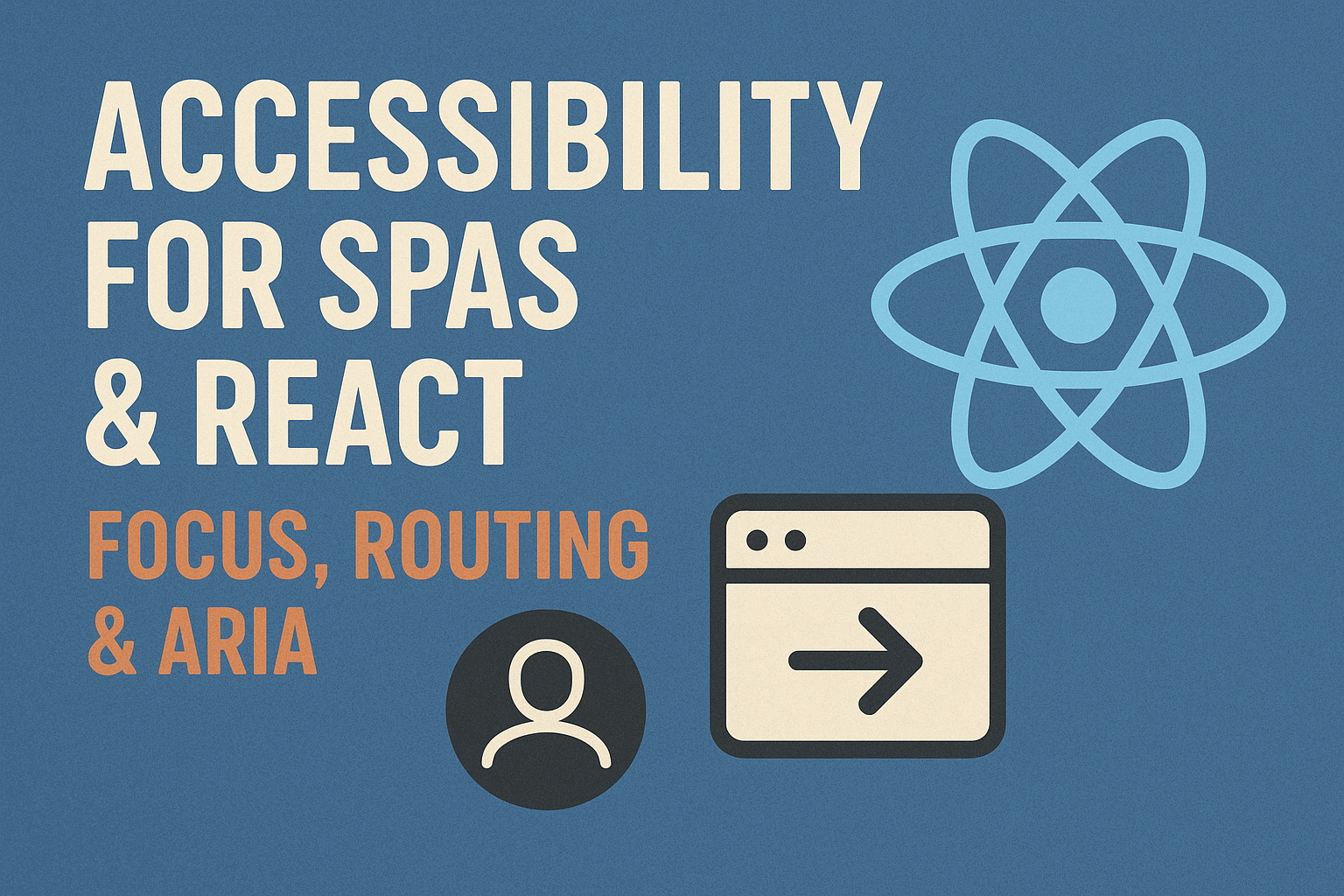
Accessibility for SPAs & React — Focus, Routing & ARIA
Accessibility for Single Page Apps & React
Introduction
Single Page Applications (SPAs) deliver fast, dynamic experiences by loading new content without full page refreshes. Frameworks like React, Vue, and Angular power most modern web apps—but they also introduce accessibility challenges. Without proper handling, focus, announcements, and semantic structure can break, leaving screen reader and keyboard users disoriented.
Accessible SPA development requires awareness of how virtual DOM updates interact with assistive technologies. By managing focus, using ARIA regions properly, and maintaining semantic consistency, developers can ensure dynamic apps meet WCAG 2.2 AA and remain usable for everyone.
Common Accessibility Challenges in SPAs
- Lack of Page Reload: Assistive technologies rely on navigation events; SPAs update content without page refresh, preventing expected announcements.
- Focus Loss: After route changes, keyboard focus may remain stuck or lost entirely.
- Dynamic Content Changes: New content doesn’t announce automatically unless developers alert screen readers via ARIA live regions.
- Incorrect Landmarks: Without semantic elements or roles, screen readers cannot detect content structure.
- Custom Components: Developers often replace native HTML with div‑based widgets that lack keyboard operability.
Focus Management in React & SPAs
1. Move Focus After Route Changes
When a new view loads, move keyboard focus to the main heading or container to help users know content has changed. In React Router, use focus hooks or effects:
import { useEffect, useRef } from "react";
import { useLocation } from "react-router-dom";

function RouteChangeAnnouncer() {
  const { pathname } = useLocation();
  const ref = useRef(null);

  useEffect(() => {
    if (ref.current) ref.current.focus();
  }, [pathname]);

  return <h1 tabIndex="-1" ref={ref}>Page Title</h1>;
}
2. Preserve Logical Keyboard Order
Avoid programmatically removing elements that hold focus. When hiding sections, use aria-hidden="true" and maintain keyboard flow consistency between visible elements.
3. Announce Page Changes
Use aria-live="polite" regions to notify screen readers of dynamic updates when the route changes without full reload.
Semantic Markup & ARIA in SPAs
SPAs often depend on JavaScript‑rendered components—so developers must ensure each component behaves like its native HTML equivalent.
- Buttons: Use native
<button>instead of<div onClick>. - Modal dialogs: Add
role="dialog"with focus trapping andaria-modal="true". - Navigation: Include
<nav>orrole="navigation"with skip links. - ARIA Roles: Only add when native semantics are missing—e.g., role="alert" for custom toast notifications.
Managing Routing Announcements
When routing changes occur in SPAs, assistive technologies don’t automatically read new page titles. Developers can fix this with programmatic updates:
- Update
<title>dynamically using React Helmet or similar libraries. - Use visible, focusable page headings (
<h1>) updated for every route. - Add a hidden ARIA live region to announce route titles:
<div aria-live="polite" aria-atomic="true" id="route-announcer">
  Welcome to Dashboard
</div>
Keyboard & Interaction Patterns
1. Ensure All Components Are Focusable & Navigable
All custom components—dropdowns, modals, accordions—should support keyboard commands like Tab, Space, Enter, and arrow keys per WAI‑ARIA Authoring Practices.
2. Visible Focus States
Do not remove the native browser focus outline. If customizing it, maintain minimum 3:1 contrast and clear visual indication.
3. Loading Indicators
Use ARIA live or status roles to announce loading and completion events. Example:
<div role="status" aria-live="polite">Loading dashboard data...</div>
Testing SPAs for Accessibility
- Test with screen readers (NVDA, VoiceOver) through route changes.
- Verify keyboard navigation after content updates—no focus loss.
- Run audits with tools like axe‑core and Lighthouse in the rendered SPA.
- Simulate dynamic updates and confirm ARIA live regions announce changes properly.
- Check tab order and skip links in every interactive view.
Best Practices for React Accessibility
- Use semantic HTML elements wherever possible.
- Track focus programmatically using React Refs during state changes.
- Leverage accessible component libraries (e.g., Reach UI, Chakra UI, MUI Accessibility Addons).
- Apply linting rules (eslint‑plugin‑jsx‑a11y) to catch ARIA misuse.
- Keep dynamic elements in the logical DOM structure during transitions.
Common Mistakes to Avoid
- Relying solely on visual transitions to indicate new content.
- Removing native focus outlines for aesthetic reasons.
- Not updating the document title or ARIA live region on route change.
- Using generic elements (
<div>,<span>) for interactive controls. - Ignoring ARIA‑authoring guidelines for custom components.
Benefits of Accessible SPAs
- Improves usability for all users by maintaining logical navigation and consistent focus.
- Complies with WCAG 2.2 requirements for dynamic content.
- Enhances SEO with structured page titles and semantic layouts.
- Reduces support requests and improves satisfaction across user groups.
Conclusion
Accessible Single Page Applications are achievable when developers consciously manage focus, semantics, and announcements. Proper route handling and thoughtful ARIA implementation ensure smooth, predictable interaction for users of screen readers and keyboards alike—without compromising modern app performance.
Next steps: Audit your React or SPA project for focus management, announce routing updates via ARIA live regions, and adopt semantic HTML in every component for truly accessible, dynamic experiences.