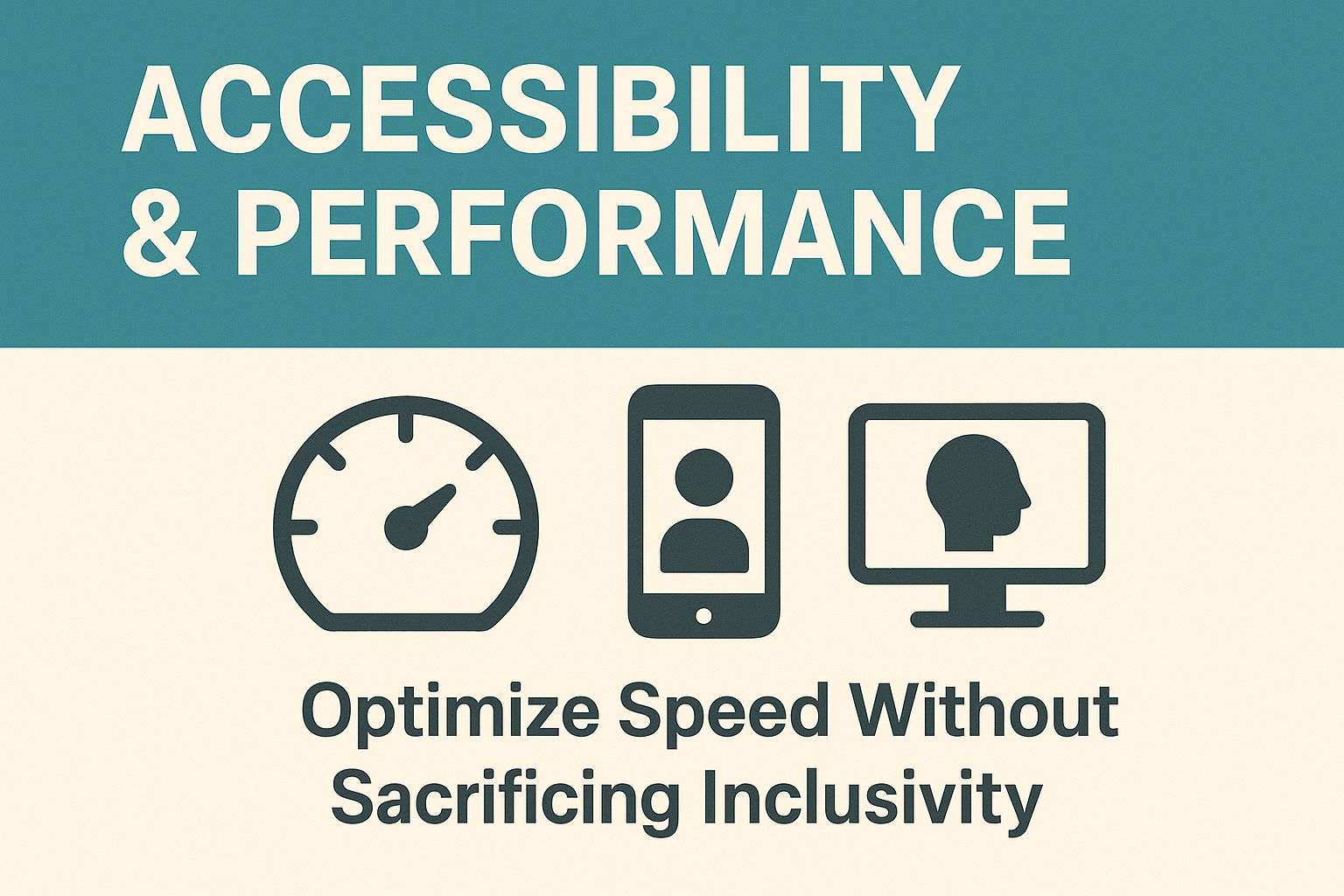
Accessibility & Performance — Optimize Speed Without Sacrificing Inclusivity
Accessibility & Performance: Balancing Speed and Inclusivity
Introduction
Fast websites improve user satisfaction and search engine ranking, but performance optimization must never come at the expense of accessibility. Both speed and accessibility support good user experience: a fast, lightweight site that remains readable, navigable, and usable for all users. Balancing the two ensures inclusive design for everyone — regardless of device, network, or ability.
This section explores how accessibility and performance intersect, outlining common conflicts, optimization strategies, and techniques for maintaining both without compromise.
Why Performance & Accessibility Are Interconnected
Accessibility and performance share the same goal: creating efficient and usable experiences. Slow or heavy websites can exclude users with disabilities or older technology.
- Users with disabilities often rely on assistive technologies that perform better on clean, lightweight pages.
- Bandwidth constraints or poor hardware amplify accessibility barriers.
- Performance issues like slow rendering can break focus order or time-sensitive interactions for screen reader users.
Improving performance also often improves accessibility — fewer scripts and simpler DOM structures mean faster and more predictable interfaces.
Common Conflicts Between Accessibility & Performance
- Loading large media files (e.g., videos or background images) without alternatives slows load times and blocks screen readers.
- Lazy-loaded or dynamically injected content may delay screen reader announcements if not coded properly.
- Complex SPA frameworks render slowly on older devices, harming accessibility for users relying on reduced-motion or high-contrast modes.
Performance Optimization Through Accessibility
1. Semantic HTML
Semantic, minimal markup reduces page weight while improving the accessibility tree for assistive tech. Elements like <button> or <nav> natively support roles and states, eliminating heavy JavaScript dependencies.
2. Lightweight, Accessible Media
Compress images and videos, provide alt text, and use formats optimized for speed (e.g., WebP). Provide captions or transcripts via small text files instead of hard-coded subtitles in video tracks.
3. Efficient JavaScript
Avoid blocking main-thread scripts that cause screen reader delays or disrupt focus. Defer non-critical scripts and pre-load key accessibility assets (like focus outlines or skip links).
4. Optimize Fonts
Load web fonts asynchronously. Define accessible fallbacks using system fonts to maintain readable typography even when fonts fail to load.
5. Simplify DOM & ARIA
Overusing divs and ARIA roles slows down rendering and increases screen reader parsing complexity. Keep markup clean and purposeful.
Accessibility Features That Improve Performance
- Reduced motion: Respect users’
prefers-reduced-motionsetting to avoid resource-heavy animations. - Lazy loading: Combine efficient lazy loading with accessible loading indicators (
aria-liveupdates). - Progressive enhancement: Core functionality should work with or without advanced scripts, ensuring fast load times.
Performance Metrics Affecting Accessibility
- First Contentful Paint (FCP): Quick rendering helps users orient faster, including those using screen readers.
- Time to Interactive (TTI): Affects keyboard and assistive navigation responsiveness.
- Largest Contentful Paint (LCP): Essential for visual stability and readability.
- Cumulative Layout Shift (CLS): Prevent motion that can disorient users with vestibular sensitivities.
Using tools like Lighthouse or WebPageTest helps teams analyze performance metrics alongside accessibility.
Testing Accessibility and Performance Together
- Run automated audits (Lighthouse, axe, Wave) and compare accessibility results with performance scores.
- Simulate slow network speeds and low-end devices—verify that content and assistive labels still load correctly.
- Monitor JavaScript errors that may disrupt screen reader output or keyboard focus.
- Include accessibility checks in your CI/CD pipeline alongside performance budgets.
Common Pitfalls to Avoid
- Removing visible focus outlines in pursuit of aesthetic “performance.”
- Disabling keyboard focus or ARIA features to reduce DOM complexity.
- Compressing images without checking readability of text overlays or color contrast.
- Over-optimizing by removing ARIA roles or alt text mistakenly seen as “extra markup.”
Best Practices
- Use responsive, accessible images with the
<picture>element to load smaller assets by viewport. - Serve content progressively—load core readable text before assets or layout animations.
- Implement caching strategies for static accessibility assets (CSS, ARIA helper scripts).
- Pair accessibility audits with performance reviews quarterly or per major release.
Benefits of Balancing Accessibility & Performance
- Improved usability and satisfaction for all users.
- Higher search engine rankings via improved speed and structure.
- Reduced load time for assistive tool users, improving screen reader response.
- Lower bounce rates and better conversions across devices and bandwidth conditions.
Conclusion
Accessibility and performance should work hand‑in‑hand. Clean code, semantic structure, and optimized media improve both user experiences and technical efficiency. By testing performance and accessibility in tandem, developers can build sites that are fast, accessible, and future‑ready.
Next steps: Run simultaneous accessibility and performance audits on your product. Document overlaps, fix shared underlying issues like complex DOM structures, and make inclusivity and speed equal priorities across your development pipeline.