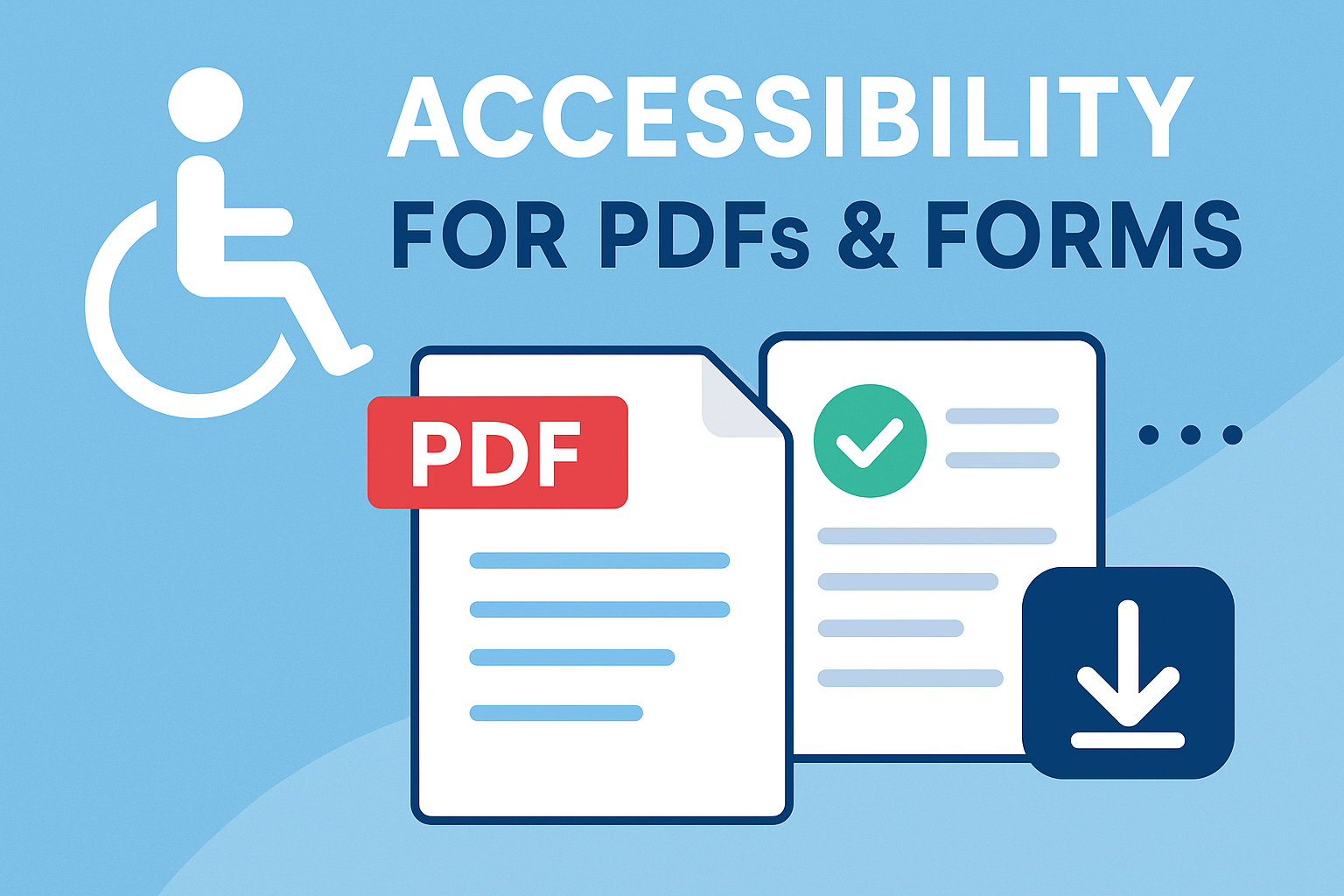
Accessibility for PDFs & Forms — Tagged PDFs & Accessible Downloads
Accessibility for PDFs, Forms & Downloads
Introduction
PDFs, downloadable forms, and other offline assets are commonly used for sharing important information—reports, applications, brochures, and contracts. Yet many downloadable files remain inaccessible because they lack proper tagging, semantic structure, or adaptability for screen readers. Making downloadable content accessible ensures equal access for everyone, including people who depend on assistive technologies such as screen readers, magnifiers, or keyboard navigation.
Accessible downloads align with WCAG 2.2, PDF/UA (ISO 14289), and regional compliance standards such as Section 508 in the U.S. or the European Accessibility Act (EAA). Accessibility should be built into the authoring process from the start—not fixed afterward.
Why Accessible Downloads Matter
Inaccessible PDFs and forms create serious barriers. Screen readers can’t interpret scanned text without OCR, and untagged content prevents logical navigation. Accessibility enables people to read, complete, and submit documents independently, fostering compliance and inclusion.
- Ensures that visually impaired users can read and navigate documents.
- Allows keyboard and assistive technology users to complete interactive forms.
- Complies with legal accessibility requirements across jurisdictions.
- Improves search indexing and document portability for everyone.
Accessible PDF Basics
1. Use Proper Structure Tags
A PDF’s tags act like HTML’s semantic markup, identifying headings, lists, paragraphs, and tables for screen readers. Use your authoring software’s built‑in accessibility tools—such as the Tags panel in Adobe Acrobat Pro—to verify logical reading order and consistent tags.
2. Add Alternate Text for Images
Include descriptive alt text for charts, illustrations, and photos that convey meaning. Purely decorative images should be marked as decorative or given empty alt attributes.
3. Define Reading Order
Confirm that text flows logically, especially in multi‑column layouts or complex tables. Acrobat’s Order panel allows you to drag and adjust reading sequences.
4. Check Language Settings
Specify the document’s default language under file properties. This helps screen readers select correct pronunciation and linguistic cues.
Accessible Form Design in Documents
Interactive PDF forms require additional attention. Accessible forms support keyboard navigation, field labeling, and validation feedback. Key practices include:
- Label all fields with visible text and accessible names.
- Set logical tab order using form editing tools.
- Use Acrobat’s Prepare Form tool to ensure labels are programmatically associated with inputs.
- Provide instructions at the top of the form in plain language.
- Ensure field error messages are descriptive and accessible (e.g., “Postal code must be five digits”).
For web forms converted to PDF, verify that required field indicators (like *) have text equivalents and that color is not the only cue.
Alternative Formats for Accessibility
Some users may not be able to interact with the downloaded PDF easily. Offer alternate formats such as:
- Structured HTML or responsive web versions.
- Accessible Word documents with proper headings and styles.
- Plain‑text versions for users needing simplified structure or low‑bandwidth access.
Providing multiple formats ensures that accessibility extends beyond the PDF file itself.
Accessibility Testing for PDFs
Automated Tools
- Adobe Acrobat Accessibility Checker – identifies tagging, contrast, and reading‑order issues.
- PAC 3 (PDF Accessibility Checker) – verifies compliance with PDF/UA standards.
- WebAIM PDF Resource – guidance for testing and remediating documents.
Manual Checks
Always test with screen readers such as NVDA or JAWS. Confirm that headings announce correctly, form fields read their labels, and focus order matches visual flow. Review alternate text output and ensure all required fields are reachable and operable by keyboard.
Common Mistakes to Avoid
- Exporting scanned documents without optical character recognition (OCR).
- Leaving forms untagged or lacking field labels.
- Incorrect reading order or nested tags causing confusion.
- Overusing images of text instead of live text.
- Neglecting document language and metadata settings.
Integrating Accessibility in Document Workflows
Create accessible templates and train content creators to follow consistent workflows:
- Use properly styled headings and lists in authoring apps like Word or InDesign.
- Export using “Create Tagged PDF” or similar accessibility options.
- Use checklists aligned with PDF/UA standards for final QA.
- Maintain an accessibility review policy before public release.
Best Practices for Accessible Downloads
- Offer a clear file description, size, and format next to each download link.
- Ensure links are descriptive (e.g., “Download 2024 Annual Report (PDF, 5 MB)”).
- Provide contact options or feedback channels for users encountering issues.
- Archive older, inaccessible documents only if alternative formats exist.
- Review accessibility after every update or version change.
Benefits of Accessible Files
- Improved usability for everyone, from screen reader users to mobile viewers.
- Compliance with legal accessibility standards and reduced litigation risk.
- Enhanced search indexing and discoverability for document content.
- Better user satisfaction and brand credibility through inclusive practices.
Conclusion
Accessible PDFs, forms, and downloads ensure that no user is excluded from essential information or transactions. By applying tagging, labeling, and alternative format strategies from the start, businesses and organizations can eliminate barriers, comply with global standards, and demonstrate genuine commitment to digital inclusion.
Next steps: Audit your existing document library for accessibility compliance, remediate untagged files, and standardize accessible export templates for all new PDFs and downloadable forms.