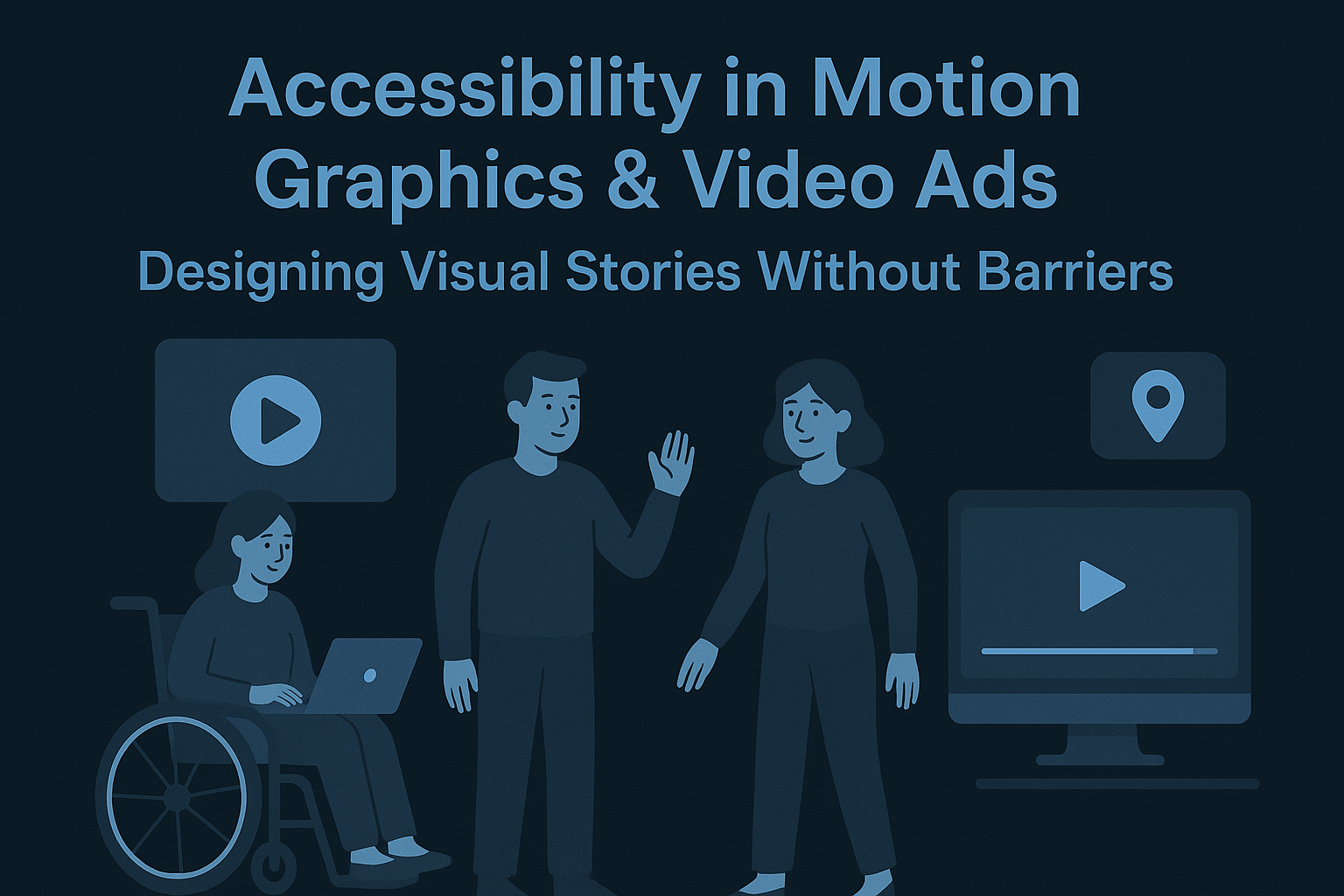
accessibility in Motion Graphics & Video Ads — Designing Visual Stories Without Barriers
Accessibility in Motion Graphics & Video Ads — Designing Visual Stories Without Barriers
Introduction
Motion graphics and video advertising are powerful storytelling tools — they capture attention, simplify ideas, and evoke emotion. But for users with visual, hearing, or cognitive disabilities, motion media can become an obstacle instead of an opportunity if not designed inclusively. Accessibility ensures that everyone can perceive and understand visual stories through captions, audio descriptions, and controlled motion. Inclusive video design aligns creativity with responsibility, balancing engagement and equity.
This post covers practical ways to make motion graphics and advertising content accessible under WCAG 2.2 and ISO / IEC 40500 (Web Accessibility standards).
Why Accessible Motion Matters
- Advertising and micro‑video content often exclude disabled audiences through rapid movement or missing text alternatives.
- Autoplay and flashing sequences can trigger discomfort or seizures (WCAG 2.3 – Seizures and Physical Reactions).
- Accessibility enhances reach — captions, transcripts, and controls improve engagement for all viewers, especially in sound‑off environments.
Key Accessibility Requirements for Motion Content
WCAG provides several criteria guiding accessible video and animation design:
- 1.2.2 Captions (Prerecorded): All spoken dialogue and essential audio must be captioned.
- 1.2.5 Audio Description: Add narration for important visual elements.
- 2.2.2 Pause, Stop, Hide: Users must pause or stop autoplay animations lasting more than 5 seconds.
- 2.3.1 Three Flashes or Below Threshold: Avoid content that flashes more than 3 times per second.
- 2.3.3 Animation from Interactions: Provide users the option to reduce motion.
Designing Inclusive Motion Graphics
1. Respect User Preferences
Use the CSS media query prefers-reduced-motion to disable or simplify motion for sensitive users and those with motion disorders.
@media (prefers-reduced-motion: reduce) {
  * {
    animation-duration: 0.001ms !important;
    transition-duration: 0.001ms !important;
  }
}
- Offer manual “Reduce Motion” toggles within your interface.
- Default static visuals or short crossfades replace large movements.
2. Provide Captions & Transcripts
Any motion graphic or video ad with dialogue, music, or critical sound effects should include synchronized captions and transcripts.
<video controls>
  <source src="ad-spot.mp4" type="video/mp4">
  <track src="captions-en.vtt" kind="captions" srclang="en" label="English">
</video>
- Captions should describe sounds and music as well as speech.
- Transcripts provide a full text version of the content for screen readers and search indexing.
3. Add Audio Descriptions
Use an additional audio track or integrated voice narration to explain essential visual actions, text on screen, or scene changes.
- Integrate descriptions into pauses in dialogue for natural flow.
- Provide accessible download options for described versions of ads and videos.
Color, Contrast & Text Legibility
- Ensure all on‑screen text meets minimum contrast ratio (4.5:1) against backgrounds (WCAG 1.4.3).
- Avoid placing text over busy backgrounds without solid contrast layers or drop shadows.
- Keep title and call‑to‑action text visible for at least 2 seconds to ensure readability.
- Provide pause controls for viewers to replay or study content.
Accessible Advertising Formats
Video ads have limited time and complex visuals, making accessibility tricky. Avoid information that is conveyed through motion alone. Combine visual and verbal messaging.
- Use narration for key brand or product messages.
- Include on‑screen branding as text or logo with alt descriptions.
- Keep interactive ads keyboard and screen reader accessible (through focus indicators and ARIA roles).
Testing & Quality Assurance
Accessibility testing should occur throughout the production pipeline — not just after editing. Use a combination of human review and automated tools to validate the final experience.
- Check captions sync accurately with speech and sound.
- Verify color contrast ratio using WebAIM Contrast Checker.
- Test pause controls with keyboard navigation.
- Confirm flashing content meets WCAG 2.3.1 (Flashes ≤ 3 per second).
- Ask users with screen readers and sensory sensitivities to evaluate experience comfort level.
Common Accessibility Barriers
- Auto‑play videos with sound: Disorient screen reader and motor users who cannot quickly pause.
- Lack of captions or descriptions: Eliminates audience segments who depend on them.
- Rapid cuts and strobing: Trigger seizure risks and visual overload.
- Fine text or low contrast titles: Lost in mobile or small screen contexts.
Best Practices for Motion Accessibility
- Plan captions and audio descriptions during storyboarding — not after export.
- Test motion assets using “reduce motion” OS settings.
- Maintain a steady visual rhythm — avoid surprising jumps and extreme camera movements.
- Provide pause, mute, and replay controls for short‑form advertising.
- Document template‑level accessibility requirements in your motion graphic design system.
Conclusion
Accessible motion graphics and video ads bring stories to life for every viewer. By incorporating captions, audio descriptions, controlled motion, and tested contrast, you can create emotionally resonant and compliant media experiences that serve all audiences equitably. Accessibility doesn’t limit creativity — it broadens impact and builds trust through inclusion.
Next Steps: Audit your motion and video assets for WCAG 2.2 criteria, introduce captioning as a standard creative step, and train media teams in inclusive storytelling principles that connect with everyone.