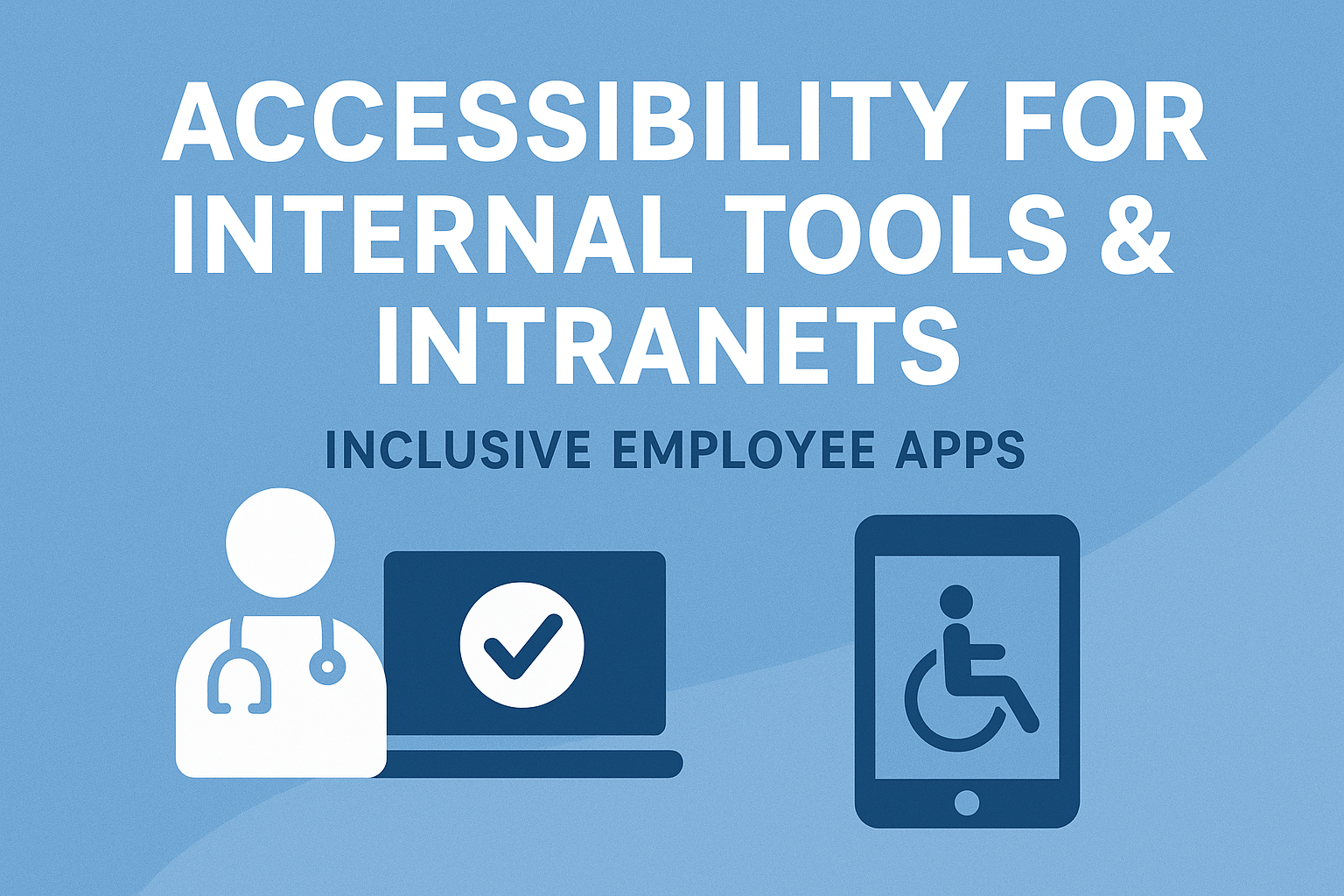
Accessibility for Internal Tools & Intranets — Inclusive Employee Apps
Accessibility isn’t just for customer‑facing interfaces—it’s equally vital for internal systems that employees rely on daily. From HR portals and internal communication platforms to dashboards and enterprise applications, inaccessible tools can limit productivity and exclude team members with disabilities.
Creating accessible internal software demonstrates organizational inclusion, improves efficiency, and fulfills legal obligations under standards such as the ADA, Section 508, and the Equality Act (UK). Accessible workplaces empower every employee to contribute fully and independently.
Internal tools often go unnoticed in accessibility planning—but they directly affect employee engagement, communication, and retention. Accessibility in intranets and enterprise software:
Accessibility for Internal Tools & Intranets
Introduction
Why Internal Accessibility Matters
Each tool influences daily productivity—making accessibility integral to overall organizational performance.
Use the same standards applied to customer‑facing sites for internal systems. Ensure content is perceivable, operable, understandable, and robust across devices and assistive technologies.
Employees using mobility aids or screen readers must be able to navigate systems fully via keyboard. Check focus order, logical tabbing, and visible focus indicators.
Test software with screen readers such as NVDA, JAWS, or VoiceOver, and confirm that all UI components surface correctly through platform accessibility APIs.
Support input through mouse, keyboard, touch, and voice (e.g., dictation or screen readers). Provide consistent shortcuts and clear focus management.
Internal interfaces often contain complex workflows. Using consistent layout, plain language, and predictable behavior reduces cognitive load and improves usability for all employees.Typical Internal Systems That Require Accessibility
Key Accessibility Practices for Internal Tools
1. Apply WCAG 2.2 AA Standards
2. Provide Keyboard Navigation
3. Ensure Compatibility with Assistive Tech
4. Offer Multiple Interaction Methods
5. Use Simple, Consistent Interfaces
For legacy platforms, remediation may involve incremental improvements:
Include internal accessibility requirements in IT, HR, and procurement policies. For example:
This institutionalizes accessibility as part of business governance rather than an optional enhancement.
Ensure employees understand available accessibility tools and settings, such as high‑contrast modes, magnifiers, keyboard shortcuts, and voice control.
Offer regular training on creating accessible internal content (e.g., Word or SharePoint documents) and accessibility awareness workshops for developers and administrators.
Accessible internal tools and intranets create inclusive digital workplaces where everyone can collaborate effectively. By embedding WCAG 2.2 principles, training teams, and holding vendors accountable for accessibility, organizations can build equitable, efficient, and compliant digital ecosystems.
Next steps:
Audit your intranet or internal applications for accessibility barriers, train staff in inclusive best practices, and include accessibility clauses in all future software procurement and design processes.
Remediating Existing Intranets & Systems
Accessibility Policies & Governance
Training & Awareness for Employees
Testing Internal Tools for Accessibility
Common Issues in Internal Applications
Benefits of Accessible Internal Systems
Conclusion