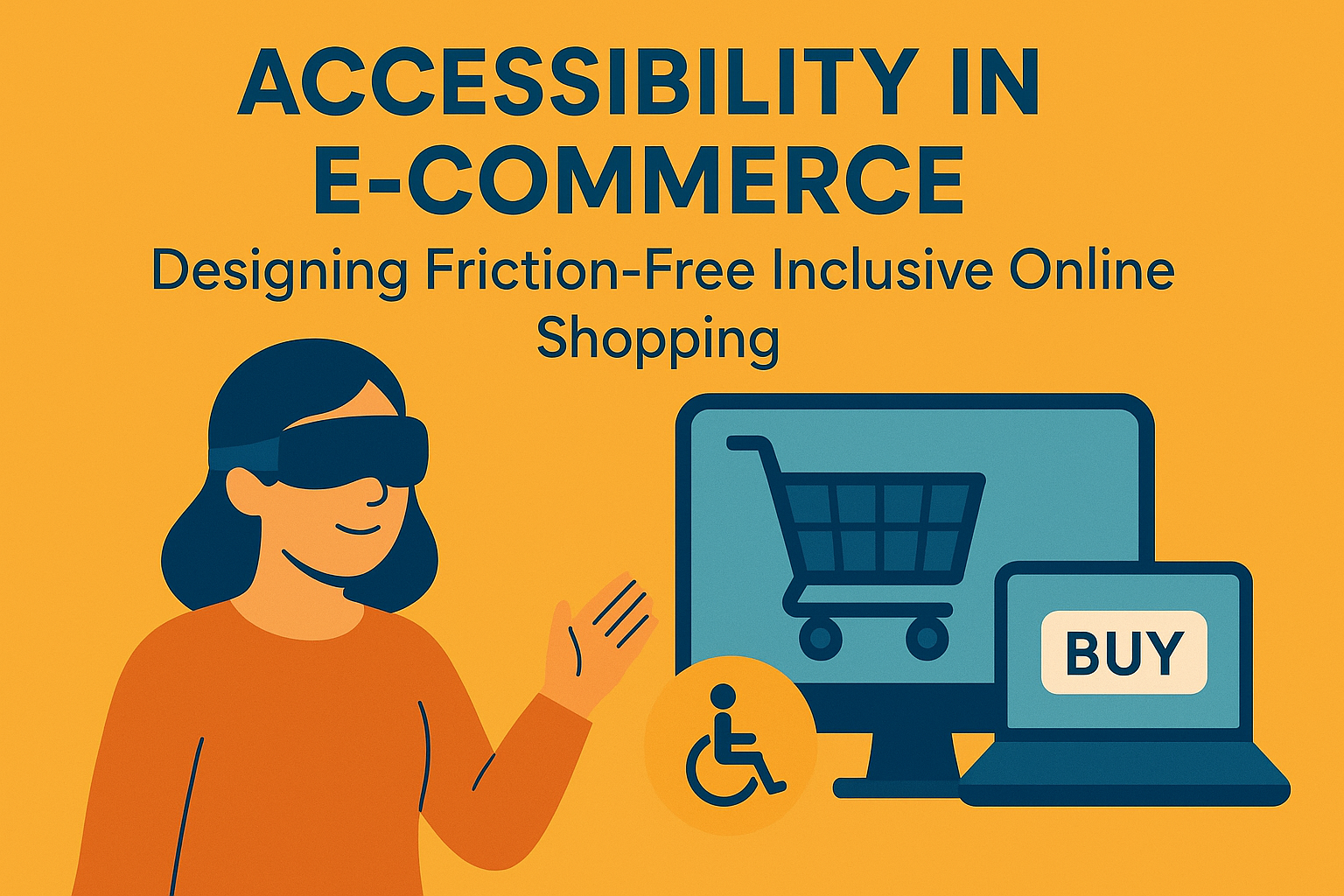
Accessibility in E‑Commerce — Designing Friction‑Free Inclusive Online Shopping
Accessibility in E‑Commerce — Designing Friction‑Free Inclusive Online Shopping
Introduction
Online shopping is a daily activity for consumers around the world, but for millions of people with disabilities, many e‑commerce sites remain difficult or impossible to use. Missing alt text, inconsistent navigation, or inaccessible checkout forms can exclude buyers — directly impacting customer trust and revenue. Designing accessible e‑commerce experiences ensures that every customer can browse, compare, and complete purchases independently and confidently.
This article outlines how to create inclusive e‑commerce platforms aligned with WCAG 2.2 and international consumer accessibility standards such as EN 301 549 and ADA Title III.
Why Accessibility in E‑Commerce Is Critical
- Legal frameworks worldwide require e‑commerce accessibility under disability laws.
- Improving usability for shoppers with disabilities also enhances conversion rates and SEO for all users.
- Inclusive shopping experiences build brand trust and loyalty across diverse audiences.
Accessible Storefront & Navigation
Shoppers should reach desired products efficiently and understand site structure without reliance on visual cues alone.
- Use semantic HTML (headings, lists, landmarks) to structure navigation clearly for screen readers.
- Provide a consistent header, menu, and breadcrumb path across pages (WCAG 3.2.3 Consistent Navigation).
- Ensure keyboard‑only users can navigate all categories, menus, and filters via Tab and Enter.
- Provide search functionality with autocomplete that is labeled and announced properly.
<nav aria-label="Product Categories">
  <ul>
    <li><a href="/electronics">Electronics</a></li>
    <li><a href="/home">Home & Living</a></li>
    <li><a href="/clothing">Clothing</a></li>
  </ul>
</nav>
Accessible Product Pages
Product discovery relies on accurate and accessible information presentation.
- Add high‑quality alt text for product images that describe color, texture, and key details (e.g., “Red cotton T‑shirt with round neck”).
- Provide zoom and magnification controls with keyboard access and assistive tech compatibility.
- Ensure price, ratings, and availability are delivered as real text (not images).
- Use structured data (schema.org/Product) to enhance assistive technology and search readability.
<img src="tshirt-red.jpg"
     alt="Red cotton T‑shirt, round neck, short sleeves"
     width="400" height="400">
Filtering & Sorting Accessibility
- Use ARIA roles and labels for filters and sort menus (
role="menu",aria-label="Sort by"). - Announce changes to filter results via
aria-live="polite"so screen readers detect product updates. - Ensure focus returns to the product grid after filtering to maintain context for keyboard and screen reader users.
Accessible Shopping Cart & Checkout
1. Cart Overview
- Use tables to structure cart items with
scope="col"androwheaders. - Ensure quantity inputs and delete buttons are accessible and announced with labels and descriptions.
- Screen readers should announce confirmations: “Item removed from cart” or “Quantity updated.”
2. Checkout Forms
Forms are a common failure point for accessibility — simplify and communicate clearly.
- Associate labels and instructions using
<label for>andaria-describedbyattributes. - Display error messages inline with accessible live regions to announce errors dynamically.
- Provide auto‑completion for address and credit card fields using
autocompleteattributes. - Support multiple payment methods that do not depend solely on mouse‑based interactions.
<label for="email">Email Address</label>
<input type="email" id="email" name="email"
       autocomplete="email" aria-describedby="emailHint">
<div id="emailHint">We'll send your confirmation here.</div>
Multimedia & Promotions
- Caption or describe promotional videos and carousels with pause/stop controls (WCAG 2.2.2).
- Avoid auto‑advancing banners that shift focus unexpectedly.
- Provide clear calls to action with both visual and textual indicators.
Mobile E‑Commerce Accessibility
Mobile apps and responsive web stores require touch‑target precision and zoom support for low‑vision users.
- Ensure buttons and touch areas measure at least 44×44 px.
- Maintain zoom capability; never disable pinch to zoom (
user‑scalable=noviolates WCAG 1.4.4). - Test voice navigation (Siri, TalkBack, VoiceOver) for critical shopping paths.
Testing Accessibility in Online Stores
- Run automated WCAG scans with axe, WAVE, and Pa11y on storefront and checkout flows.
- Perform manual testing with screen readers to validate labels and focus order.
- Validate keyboard‑only operation — no component must trap focus.
- Include user testing with disabled customers to assess real‑world experience.
Common Accessibility Issues
- Missing alt text: Product images lack descriptions for screen reader users.
- Inaccessible modals: Pop‑ups without focus management or keyboard support.
- Timed checkout sessions: No extensions for users who need more time.
- Dynamic updates without ARIA: Cart states change with no announcement.
Best Practices for Inclusive E‑Commerce
- Adopt WCAG AA conformance as a design baseline for all components and vendors.
- Provide an accessible wishlist and save cart functionality to support longer decision cycles.
- Train content teams to write alt text and product descriptions that convey meaning, not marketing fluff.
- Implement regular accessibility audits — especially after design or platform changes.
Conclusion
Accessible e‑commerce removes barriers between customers and conversion. When people can navigate, understand, and purchase with confidence, brands gain loyalty — and society moves toward true digital inclusion. Accessibility isn’t only about compliance; it’s about welcoming every shopper through equal experience design.
Next Steps: Audit your store flows (end‑to‑end), fill alt text gaps, and build accessibility .testing checkpoints into every release cycle to keep online shopping completely friction‑free for everyone.