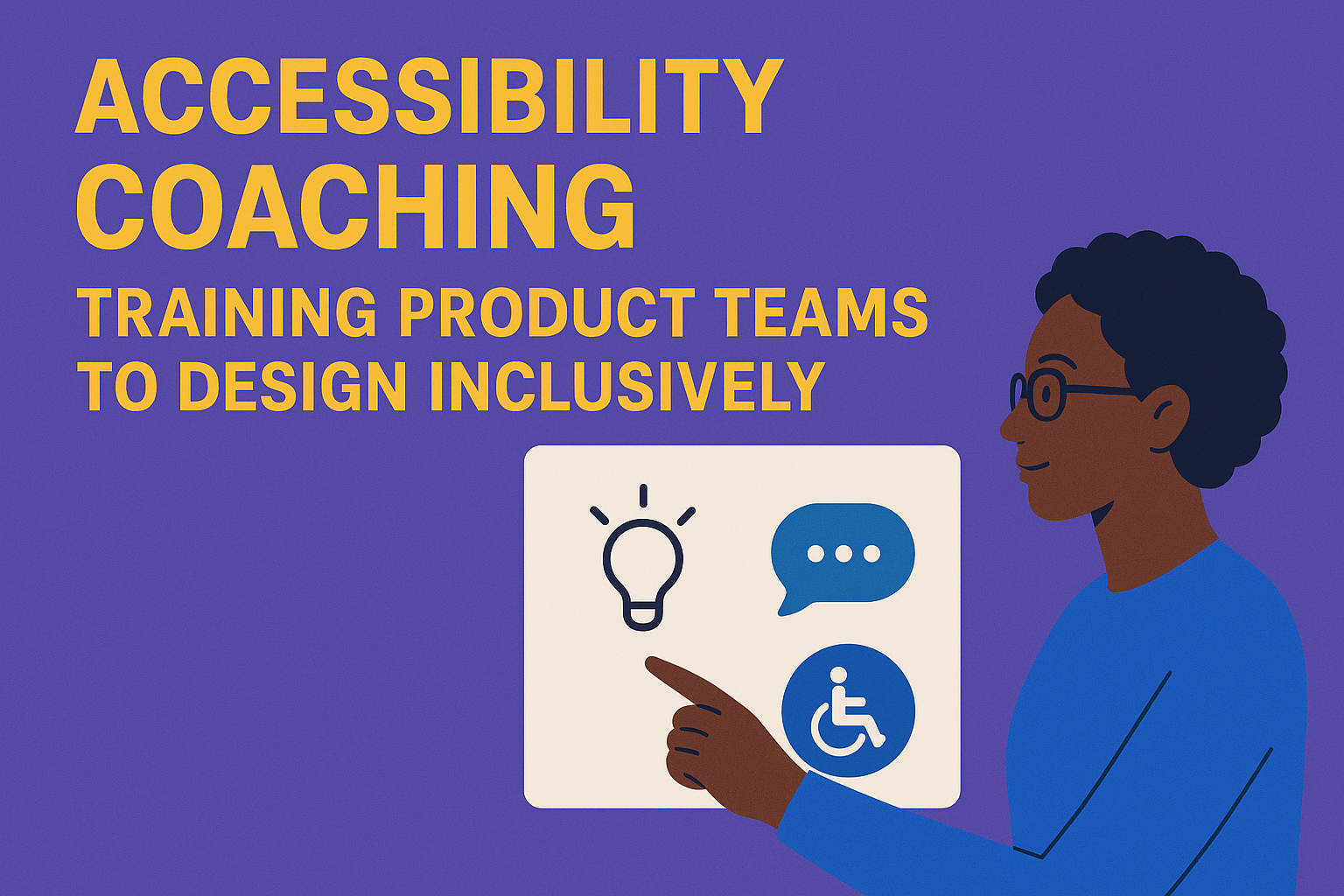
Accessibility Coaching — Training Product Teams to Design Inclusively
Accessibility Coaching — Training Product Teams to Design Inclusively
Introduction
Building inclusive digital products requires more than audits and compliance checklists — it demands culture change. Accessibility coaching bridges the gap between awareness and consistent application. By embedding accessibility mentors within product teams, organizations can transform accessibility from a reactive fix to a proactive design habit.
This article explores how to create effective coaching programs that upskill designers, developers, and product managers to integrate accessibility principles into their day‑to‑day work.
Why Accessibility Coaching Matters
- Empowers teams to identify and fix accessibility issues early in the design and development phases.
- Reduces long‑term remediation costs through proactive inclusion practices.
- Builds organizational fluency in WCAG 2.2 guidelines and inclusive design patterns.
- Encourages cross‑functional empathy for users of assistive technologies.
Core Coaching Objectives
1. Knowledge Transfer
- Educate teams on accessibility fundamentals and WCAG success criteria.
- Provide hands‑on sessions demonstrating real‑world accessibility testing and assistive tech use.
- Document internal accessibility playbooks or design system guidance.
2. Skill Development
- Teach designers to apply color contrast, keyboard focus, and ARIA semantics proactively.
- Train developers to integrate automated accessibility testing into CI/CD pipelines.
- Coach product managers to define accessibility acceptance criteria and story priorities.
3. Cultural Enablement
- Nurture a network of accessibility champions who drive awareness in each department.
- Encourage accessibility retrospectives after each release to celebrate progress and lessons learned.
- Make accessibility coaching part of leadership development and onboarding tracks.
Designing an Accessibility Coaching Program
Step 1: Assess Current Maturity
Evaluate your organization’s current accessibility maturity level — from ad‑hoc remediation to continuous inclusion. Identify knowledge gaps through surveys, product audits, and design reviews.
Step 2: Define Coaching Models
- Centralized Model: Dedicated accessibility coaches serve multiple teams.
- Embedded Model: Coaches work directly within each product squad.
- Hybrid Model: A mix of centralized expertise and embedded advocates.
Step 3: Develop a Curriculum
Structure learning around core accessibility domains — design, development, QA, and leadership. Combine workshops, hands‑on labs, and mentoring.
- Foundations: WCAG 2.2 basics, assistive technology overview.
- Design Focus: Inclusive patterns, color contrast, and user personas.
- Development Focus: Semantic HTML, ARIA practices, automated checks.
- QA Focus: Manual accessibility testing workflows and common issue patterns.
Step 4: Measure and Sustain Progress
- Track number of teams coached, sessions delivered, and participants certified.
- Use post‑training assessments to measure retention and behavior change.
- Integrate coaching outcomes into performance reviews and OKRs for long‑term accountability.
Recommended Coaching Metrics Framework
| Metric | Data Source | Frequency | Goal / Benchmark |
|---|---|---|---|
| Teams Trained in Accessibility | Training Logs / HR Systems | Quarterly | > 90% of active product teams |
| Accessibility Skill Assessment Score | Post‑Workshop Surveys | Quarterly | > 80% |
| Accessibility Champion Engagement | Team Reports / Attendance | Monthly | 100% active participation |
| Accessibility Defects Prevented Pre‑Release | CI/CD Reports | Per Sprint | > 70% defect reduction |
Integrating Coaching into Product Workflows
1. During Design
Coaches partner with designers to perform inclusive design reviews, ensuring color contrast, keyboard navigation, and meaningful alt text are considered from the start.
2. During Development
Developers receive ongoing support integrating accessibility linters and test automation into the build pipeline.
3. During QA and Release
- QA teams learn to include assistive technology checks in each regression cycle.
- Accessibility coaches review release notes for accessibility regression risks.
Common Pitfalls
- One‑time training only: Fails to build sustainable accessibility practices.
- Lack of leadership backing: Without visible executive support, coaching impact plateaus.
- No follow‑up measurement: Without KPIs, progress becomes anecdotal.
- Uneven participation: Some teams remain untrained, limiting cultural change.
Best Practices for Long‑Term Success
- Pair accessibility coaches with product mentors or scrum masters for local accountability.
- Incorporate accessibility coaching into onboarding for all new hires.
- Reward teams demonstrating outstanding accessibility performance with recognition or incentives.
- Regularly refresh training content to align with WCAG updates and evolving tech.
Conclusion
Accessibility coaching transforms accessibility from a compliance exercise into a cultural strength. By equipping teams with practical skills and ongoing mentorship, organizations can create products that serve more users with empathy and excellence. Sustained coaching ensures that inclusion isn’t a project milestone — it’s a continuous part of how great products are built.
Next Steps: Assess your organization’s accessibility maturity, define your coaching model, and launch a pilot program that empowers teams to design and code for everyone from the start.