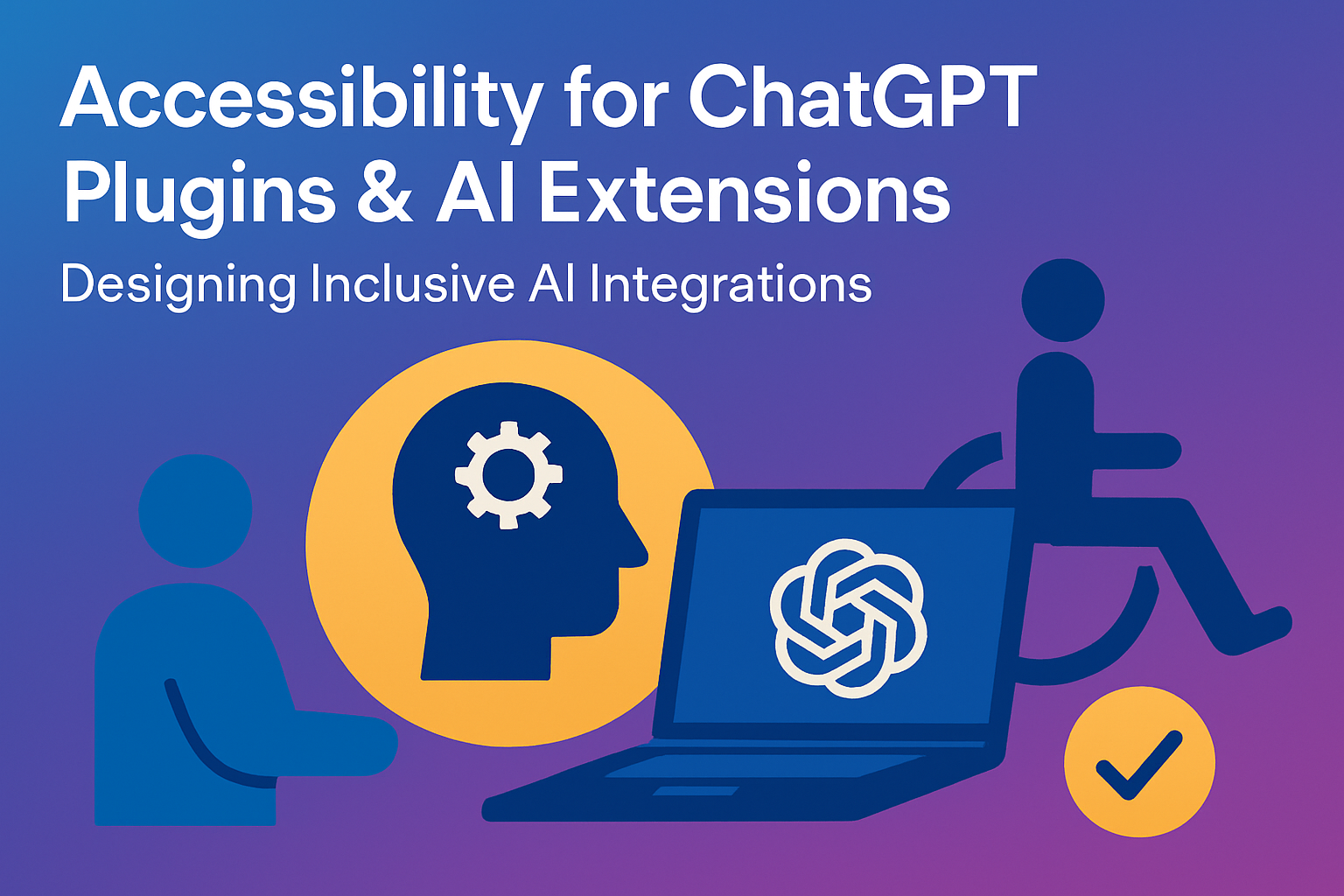
Accessibility for ChatGPT Plugins & AI Extensions — Designing Inclusive AI Integrations
Accessibility for ChatGPT Plugins & AI Extensions — Designing Inclusive AI Integrations
Introduction
As conversational AI tools and ChatGPT‑style interfaces expand their ecosystem of plugins and extensions, accessibility must be a foundational consideration — not an afterthought. AI integrations that rely on visual cues, rapid responses, or complex interactions risk excluding users who depend on assistive technologies.
This article outlines how to build accessible ChatGPT plugins and AI extensions that deliver equitable experiences across devices, sensory abilities, and user contexts — ensuring everyone can benefit from AI’s potential.
Why Accessibility Matters in AI Integrations
- Ensures conversational AI features remain operable through assistive technologies like screen readers and voice control.
- Builds trust by showing ethical commitment to inclusive, human‑centered AI design.
- Reduces legal and compliance risk under standards like WCAG 2.2 and Section 508.
- Expands the potential audience and usability of AI‑powered tools for enterprise and education.
Core Accessibility Principles for AI Plugins
1. Perceivable Outputs
- All generated content and responses must be exposed to assistive technologies via semantic markup or APIs.
- Provide text alternatives for visual output (e.g., charts, diagrams, images).
- Avoid relying solely on color or animation to convey plugin responses.
2. Operable Interactions
- All plugin interfaces — buttons, data forms, settings — must be fully keyboard navigable.
- Ensure plugins respond properly to tab focus, skip links, and ARIA roles.
- Respect input methods such as voice commands, switches, and screen reader gestures.
3. Understandable Communication
- Generate outputs that are clear, structured, and screen‑reader friendly (headings, lists, tables).
- When presenting data, allow summarization or simplified modes for cognitive accessibility.
- Ensure plugin responses provide feedback in plain language when errors or AI limitations occur.
4. Robust Technical Integration
- Use ARIA attributes and proper role semantics within plugin UI elements.
- Adhere to ChatGPT Plugin Manifest requirements to describe actions in accessible metadata (“description_for_model”, “description_for_human”).
- Ensure compatibility with major assistive tech browsers (NVDA, JAWS, VoiceOver, TalkBack).
Designing Accessible AI Plugin Experiences
Step 1: Accessible Prompt & Response Patterns
When defining plugin functions, write prompts, responses, and metadata with clarity and accessibility in mind. Avoid jargon and ensure responses can be easily parsed by assistive tools.
Step 2: Handling Visual Data Responsibly
- Provide alt text or text summaries for generated images and charts.
- When using plug‑ins that generate maps or graphs, include data tables behind the visualization.
- Offer “text‑only output” modes or API parameters for low‑bandwidth and screen‑reader users.
Step 3: Support for Cognitive Accessibility
- Allow adjustable complexity levels in responses (e.g., “simple explanation” vs. “expert summary”).
- Provide structured outputs with headings and bullet points rather than dense text blocks.
- Implement confirmation, undo, or step‑by‑step guidance for multi‑stage operations.
Step 4: Respect User Device and Environment Settings
- Honor OS and browser preferences (e.g., reduced motion, high contrast, prefers‑color‑scheme).
- Adapt to input mode changes — voice, keyboard, or touch — seamlessly.
- Store accessibility preferences persistently within plugin configurations.
Recommended Accessibility Metrics Framework
| Metric | Data Source | Frequency | Goal / Benchmark |
|---|---|---|---|
| Screen Reader Usability Audit Score | Assistive Tech Testing Reports | Quarterly | ≥ 95% successful interaction coverage |
| Keyboard Navigation Coverage | Automated and Manual Audits | Per Release | 100% focusable elements operable via keyboard |
| Alternative Text Completeness Rate | Content Validation Scripts | Continuous | 100% AI‑generated visuals with text alternatives |
| User Feedback on Accessibility | Post‑use Surveys / Support Logs | Quarterly | ≥ 4.5 / 5 average satisfaction score |
Integrating Accessibility During AI Extension Development
1. Development Guidelines
Follow accessibility best practices when defining plugin UIs using web standards.
{
  "schema_version": "v1",
  "name_for_human": "Inclusive Weather Plugin",
  "name_for_model": "weather_inclusive",
  "description_for_human": "Provides accessible, high‑contrast weather summaries with text alternatives for visual icons.",
  "description_for_model": "Accessible weather forecasts with text and color‑safe visual cues."
}
2. Testing via Assistive Technology
- Validate plugin input/output areas with screen readers and switch controls.
- Test across browsers and devices that users with adaptive technologies commonly use.
- Include users with disabilities in your beta testing programs.
3. Monitoring & Continuous Improvement
- Analyze errors related to voice input or accessibility metadata in logs.
- Provide an in‑plugin “Accessibility Feedback” link for ongoing insights.
- Iterate accessibility improvements with each update cycle.
Common Pitfalls
- Opaque AI Responses: Generated messages that lack structural markup are unreadable by screen readers.
- Over‑visualized outputs: Charts or maps without text alternatives limit content comprehension.
- Keyboard traps: Modal UIs or conversational toolbars that capture focus indefinitely.
- No preference persistence: Accessibility settings reset between sessions.
Best Practices for Sustainable Inclusive AI Design
- Define accessibility acceptance criteria for all ChatGPT and plugin features before release.
- Automate accessibility scans during build and deploy.
- Maintain human oversight — accessibility testing must complement automated checks.
- Provide clear documentation for developers integrating accessibility APIs or tokens.
Conclusion
AI integrations and ChatGPT plugins hold enormous potential to improve productivity and insight — but only if they’re built with everyone in mind. By embedding accessibility practices into each layer — from prompt design to plugin UI implementation — organizations can deliver equitable, adaptive AI experiences. Inclusive AI integration transforms innovation into access, ensuring that intelligent systems truly serve all users.
Next Steps: Review your plugin’s UI for assistive tech compatibility, audit metadata for descriptive clarity, and run a full accessibility test to ensure your next AI extension is as inclusive as it is intelligent.