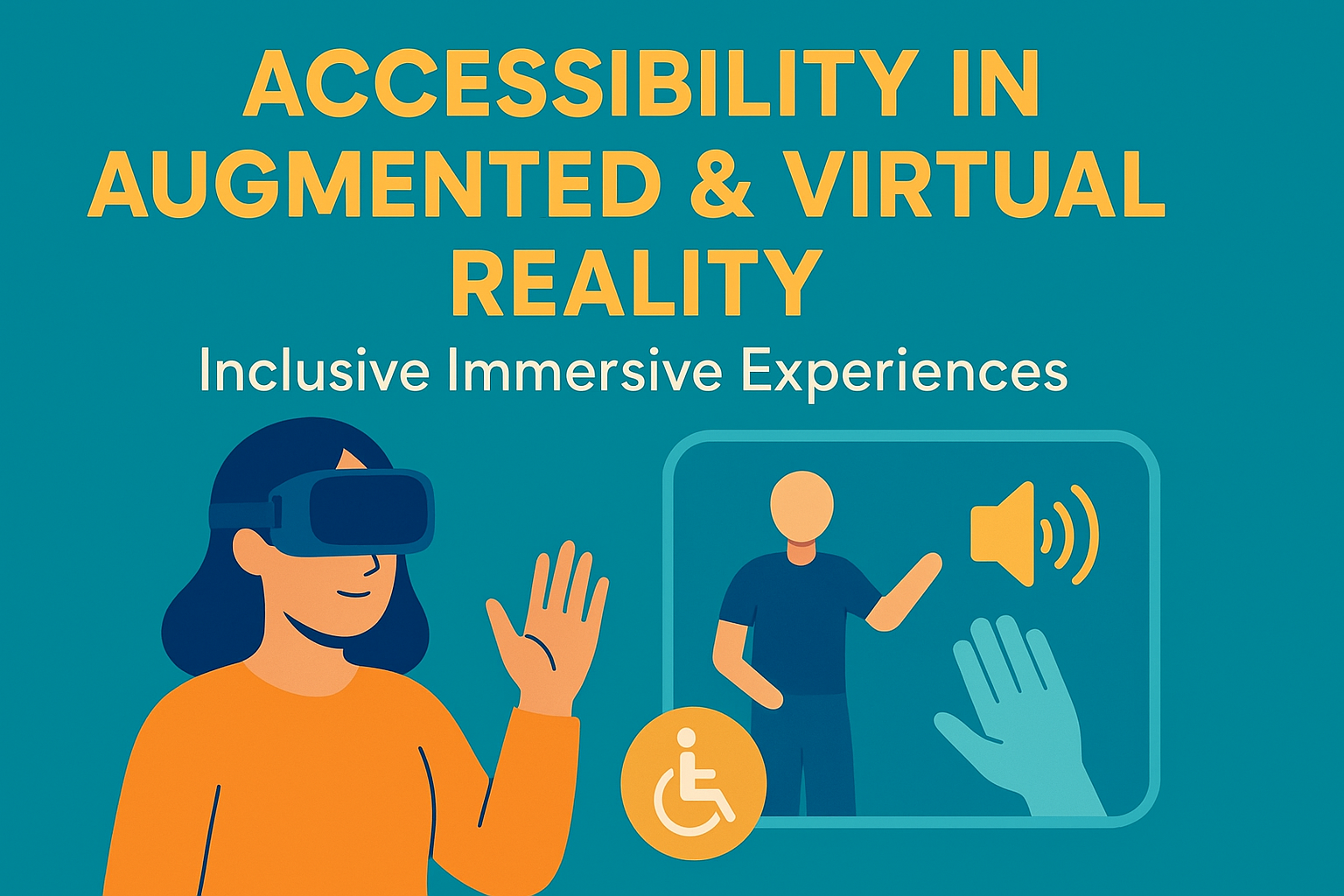
Accessibility in Augmented & Virtual Reality — Inclusive Immersive Experiences
Accessibility in Augmented & Virtual Reality — Inclusive Immersive Experiences
Introduction
Augmented Reality (AR) and Virtual Reality (VR) redefine how people interact with digital spaces — merging the physical and virtual worlds. But immersive environments can introduce accessibility barriers that go beyond the web: motion sickness, disorientation, lack of captions, or inaccessible motion controls can exclude users from participating. Accessible AR and VR design ensures that immersive innovations remain inclusive — combining sensory, cognitive, and physical accessibility for people of all abilities.
This post outlines key principles for building accessible XR (Extended Reality) experiences aligned with emerging W3C Immersive Web standards, Section 508, and WCAG guidelines where applicable.
Why Accessibility in AR/VR Matters
- AR/VR is expanding rapidly in healthcare, education, and entertainment — inaccessible design limits equal participation.
- People with visual, auditory, mobility, or cognitive impairments should have equivalent interaction options within immersive environments.
- Inclusive immersive technology supports innovation through user diversity — improving usability and reducing simulation fatigue for everyone.
Core Principles of Accessible Immersive Design
1. Multisensory Feedback
- Provide audio and visual feedback for all messages and events (e.g., object selection, boundary warnings).
- Incorporate haptic responses or controller vibrations as complementary signals.
- Use spatial audio to communicate directional information for low‑vision users.
2. Adjustable Experiences
- Offer motion intensity controls (e.g., teleport vs. smooth movement modes). This reduces dizziness and vestibular issues.
- Adjust field of view, brightness, and contrast to fit different comfort levels and visual needs.
- Allow play sitting, standing, or controller‑only to support mobility diversity.
3. Clear Communication
- Include on‑screen text alternatives and captions for instructions and dialogue.
- Provide audio descriptions for visual context and narrative cues in VR storytelling experiences.
- Ensure interface voice output synchronizes with displayed actions and menus.
Interface & Navigation Accessibility
Immersive interfaces need to be understandable and adaptable to assistive inputs.
- Design simplified, predictable interface layouts with large focus targets for controllers and gaze‑based navigation.
- Support voice commands and adaptive controllers as input alternatives.
- Maintain consistent spatial orientation and feedback to prevent disorientation.
- Create virtual safety boundaries and audible warnings for physical movement zones.
Design for Cognitive Accessibility
- Use simple content hierarchies: clear steps, consistent labels, and short task flows.
- Reduce information overload by limiting simultaneous audio or visual stimuli.
- Offer pause and help controls that are always visible or accessible by voice command.
Inclusive Hardware Considerations
- Ensure headsets and controllers fit a broad range of body sizes and mobility contexts.
- Design with weight balance and strap adjustability for comfort during extended use.
- Verify compatibility with assistive devices (e.g., wheelchairs, prosthetics, adaptive input devices).
- Offer a two‑dimensional alternative mode (AR lite or video description mode) for users unable to wear headsets.
Developing Accessible AR/VR Content
1. Environment Design
- Keep virtual environments well‑lit and avoid entirely dark or bright flashes.
- Label interactive elements with visible and audible descriptions (“Door: Press A to open”).
- Ensure textures and surfaces contrast with foreground items for clarity.
2. Captioning and Descriptions
- Provide in‑world captions or subtitle panels adjustable for size and placement.
- Include voice‑over transcription in AR overlays for spoken instructions.
3. Motion Controls & Teleportation
- Support seated interaction and controller teleportation to minimize physical strain.
- Offer customizable rotation speed and snap turn options to prevent motion sickness.
Testing AR/VR Accessibility
- Include users with disabilities in playtesting and prototype feedback.
- Test narration, captions, and input alternatives with screen reader and voice recognition tools.
- Confirm that gaze, gesture, and haptic controls work without fine motor precision requirements.
- Run color contrast and motion comfort checks via platform testing kits (Oculus, Steam VR, Magic Leap Accessibility tools).
Common Barriers in Immersive Systems
- Motion sickness: Uncontrollable camera movement or acceleration without user input.
- Lack of textual alternatives: Narrative and UI elements available only visually or audibly.
- Limited input methods: Controllers assume two‑hand precision grip use.
- Absence of captions or audio descriptions: Users miss instructions and context.
Best Practices for Accessible Immersion
- Start from inclusive defaults — accessibility options enabled on first launch.
- Provide multiple ways to perceive content (audio, text, visual, haptic).
- Support pause and exit control from any context for safety and comfort.
- Follow W3C Accessible XR and platform accessibility SDK guidelines (Oculus, Unity, Unreal Engine).
- Document available accessibility features in marketing materials for player transparency.
Conclusion
Accessible AR and VR merge innovation with inclusion, expanding the digital universe for everyone. When immersive design embraces multisensory feedback, user adjustment, and assistive integration, technology transcends limitations. Inclusive immersive experiences are not optional; they define the future of human‑centered computing.
Next Steps: Audit your AR/VR projects for accessibility, adopt standardized testing with users of different abilities, and train developers on W3C Immersive Web Accessibility guidelines to ensure equitable immersion for every user.